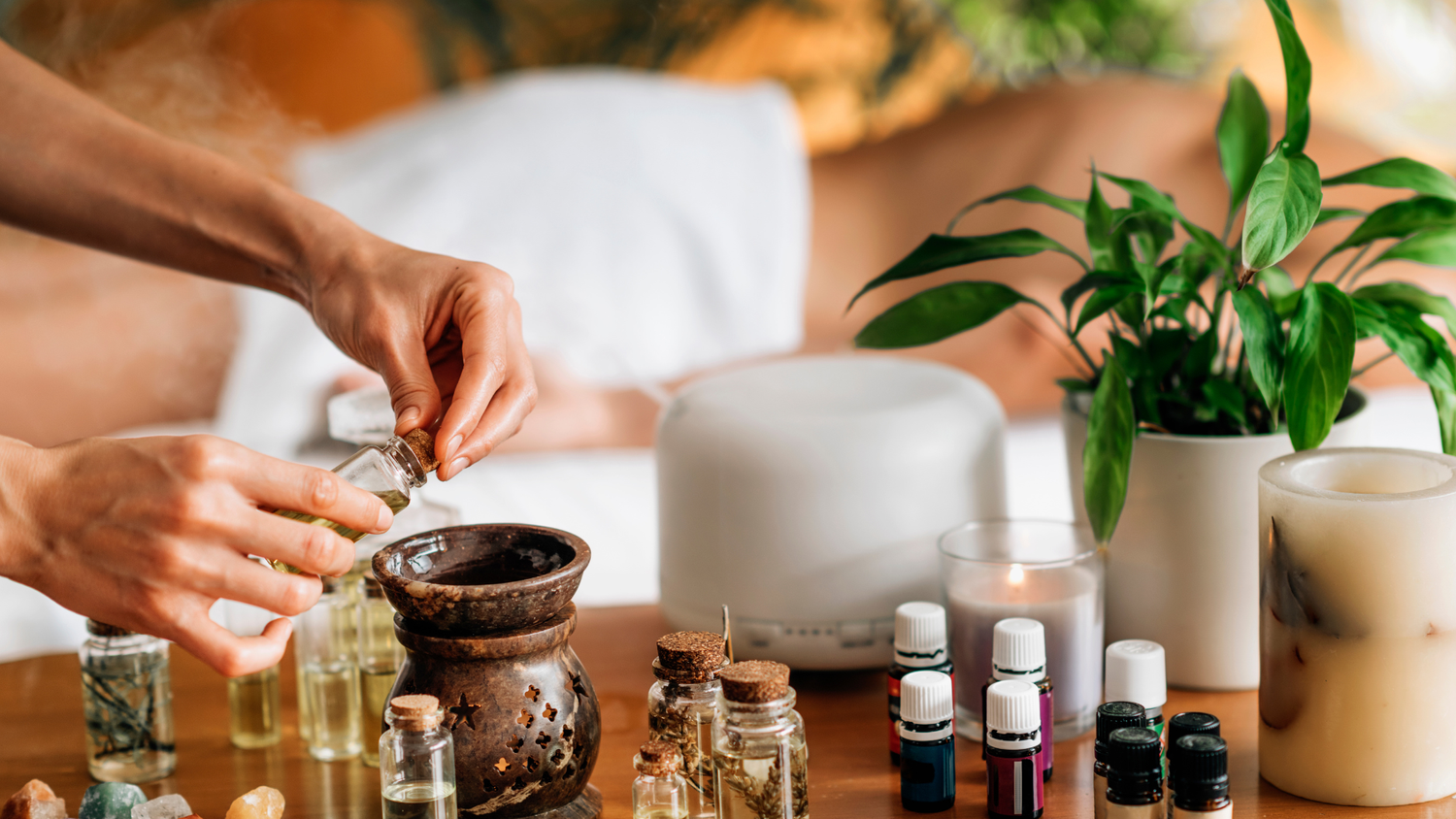
Lesson 1.1: What Is Aromatherapy?
Overview
Aromatherapy is a holistic healing treatment that uses natural plant extracts, primarily essential oils, to promote health and well-being of the body, mind, and spirit. Also known as essential oil therapy, it is recognized both as an art and a science. While it has deep historical roots, modern aromatherapy integrates advances in chemistry and pharmacology to enhance its therapeutic applications.
1. Definition of Aromatherapy
Aromatherapy is the use of essential oils extracted from aromatic plants for therapeutic purposes. These oils can be inhaled, applied topically, or occasionally used internally (with clinical training and under regulation). Aromatherapy aims to balance, harmonize, and promote the health of body, mind, and spirit.
Key characteristics include the use of 100% natural essential oils derived from various parts of plants such as flowers, leaves, bark, or roots. Aromatherapy supports holistic health across physical, emotional, mental, and spiritual dimensions. It is widely used in complementary and integrative medicine, wellness programs, skincare regimens, and natural home care.
2. Core Principles of Aromatherapy
Aromatherapy is based on several key philosophies:
3. How Aromatherapy Differs from Fragrance
One of the most common misunderstandings is equating aromatherapy with synthetic fragrance. Aromatherapy involves the use of pure plant extracts for therapeutic effects, while synthetic fragrances are chemically engineered scents without therapeutic properties.
Unlike fragrance products, aromatherapy works on both the biochemical and energetic levels of the body. Essential oils interact with the limbic system in the brain, influencing emotions, memory, and hormone levels, and they can also penetrate the skin to support physical health. Fragrances, on the other hand, are primarily designed to smell pleasant and often contain synthetic chemicals that may cause allergic reactions or disrupt hormones.
4. Common Misconceptions
Several myths surround aromatherapy:
Myth: Aromatherapy is only useful for relaxation.
Fact: While relaxation is one benefit, aromatherapy also supports physical health issues such as respiratory, digestive, and skin conditions.
5. Scope of Aromatherapy
Aromatherapy can be integrated into many areas of life, including:
6. Who Can Use Aromatherapy?
Aromatherapy is versatile and accessible. It can be used by:
7. Career Paths in Aromatherapy
Those who pursue professional training in aromatherapy can choose from a variety of paths, including:
8. Summary
Aromatherapy is a comprehensive healing modality rooted in nature and enhanced by science. Far from being just a pleasant scent, it is a powerful wellness tool capable of influencing physical health, emotional balance, and spiritual growth. Understanding its core concepts is essential for using it safely, responsibly, and effectively.
Lesson 1.2: History and Cultural Origins
Overview
Understanding the historical roots of aromatherapy offers valuable insight into its relevance, evolution, and cross-cultural influence. The use of aromatic plants and essential oils spans thousands of years and touches nearly every major ancient civilization, long before modern science began documenting their therapeutic properties.
1. Ancient Beginnings
The origins of aromatherapy can be traced back more than 5,000 years. Ancient cultures did not call it “aromatherapy,” but they practiced the use of aromatic plant materials for healing, purification, and spiritual purposes.
Egyptians: The Egyptians were among the first to master the art of extracting plant oils. They used oils in embalming, cosmetics, medicine, and temple rituals. Frankincense, myrrh, and cedarwood were commonly used in religious offerings and for preserving the dead.
Chinese and Ayurvedic Medicine: In China and India, plant-based medicine was integral to spiritual and physical wellness. Ancient Chinese texts reference the use of herbal distillates and incense. In India, Ayurveda incorporated aromatic plants like sandalwood, ginger, and turmeric in massage, detoxification, and meditation.
Greeks and Romans: Hippocrates, the Greek “father of medicine,” believed that aromatic baths and scented massage promoted overall health. The Romans, heavily influenced by the Greeks and Egyptians, used essential oils in public baths and daily life for hygiene and relaxation.
2. Middle Ages and Islamic Contributions
During the Middle Ages, Europe preserved the knowledge of plant remedies mainly through monasteries. Monks cultivated medicinal gardens and created herbal texts. Meanwhile, the Islamic world made groundbreaking advancements.
Avicenna (Ibn Sina): A Persian physician and scholar, Avicenna is credited with inventing the process of steam distillation, which revolutionized essential oil production. He documented the therapeutic uses of over 800 plants in his medical texts, such as “The Canon of Medicine.”
Trade Routes: Essential oils and aromatic spices were highly valuable trade commodities. The Silk Road and Arabian trade routes facilitated the spread of aromatic plant knowledge to Europe, Africa, and Asia.
3. Renaissance to 19th Century
The Renaissance sparked renewed interest in plant-based healing. Alchemists and apothecaries across Europe began distilling and experimenting with essential oils.
Paracelsus: A Swiss physician and alchemist, Paracelsus emphasized the power of natural substances, including aromatics, to heal the body and spirit.
Pharmacopeias and Materia Medica: These official medicinal texts began listing essential oils such as lavender and rosemary as recognized remedies for ailments ranging from infections to headaches.
However, with the rise of synthetic drugs in the 19th century, interest in natural remedies declined in mainstream medicine.
4. The Birth of Modern Aromatherapy
The term "aromatherapy" was coined in 1937 by French chemist René-Maurice Gattefossé. After severely burning his hand in a lab accident, he used lavender oil and observed remarkable healing and scar prevention. His scientific interest led to the publication of his book “Aromathérapie: Les Huiles Essentielles, Hormones Végétales.”
Jean Valnet: A military doctor who used essential oils to treat wounded soldiers during WWII, Dr. Valnet expanded aromatherapy’s medical credibility. He later wrote extensively on its clinical applications.
Marguerite Maury: An Austrian biochemist and aromatherapist, she introduced the concept of personalized essential oil blends based on a person’s unique needs, combining therapeutic use with massage and skincare.
5. Global Spread in the 20th and 21st Century
Modern aromatherapy gained momentum in the 1970s and 1980s, especially in the United States, United Kingdom, and Australia. Wellness movements, holistic medicine, and increasing interest in natural remedies fueled its popularity.
Today, aromatherapy is used by:
Courses, certification programs, and scientific research continue to support and grow the legitimacy of aromatherapy across the globe.
6. Cultural Influence and Respect
While essential oils are now globally accessible, it’s important to honor and respect the cultural origins and traditional knowledge behind their use. Many indigenous and ancient practices continue to influence how aromatherapy is approached today.
Practitioners are encouraged to:
7. Summary
The history of aromatherapy is a rich tapestry of cultural wisdom, scientific discovery, and spiritual insight. From sacred rituals in ancient temples to clinical treatments in modern hospitals, aromatherapy has evolved across millennia, adapting to new knowledge while retaining its core values: healing, balance, and the natural power of plants.
Lesson 1.3: How Aromatherapy Works – Mind, Body & Spirit
Overview
Aromatherapy operates on the principle that essential oils can support healing on multiple levels: physical, emotional, mental, and spiritual. Unlike conventional medicine, which often isolates symptoms and body systems, aromatherapy embraces an integrative approach. To fully grasp how aromatherapy works, we must understand how essential oils interact with the body’s systems, the brain, and the energetic field.
1. The Olfactory System and the Brain
One of the most direct pathways aromatherapy uses is through inhalation. When an essential oil is inhaled, molecules travel through the nasal passages to the olfactory bulb in the brain. From there, signals are transmitted directly to the limbic system—the emotional control center of the brain.
The limbic system includes the amygdala (emotion processing), hippocampus (memory), hypothalamus (hormonal regulation), and thalamus (sensory integration). This explains why scent has such a powerful effect on mood, memory, and emotion.
Examples:
This direct brain connection also affects hormonal balance, sleep-wake cycles, appetite, and stress response.
2. Topical Absorption and Physical Effects
Essential oils can be absorbed through the skin and enter the bloodstream, though not all oils penetrate at the same rate. When diluted in carrier oils, they can be applied via massage, compresses, or skincare.
Once absorbed, the chemical constituents of the oils interact with cells, tissues, and organs. This can result in:
The topical application also activates mechanoreceptors (touch-sensitive nerve endings), promoting relaxation and nervous system balance.
3. Energetic and Subtle Body Effects
Beyond physical and neurological responses, aromatherapy is often used to influence the subtle energy systems of the body. This includes chakras, meridians, and the auric field, depending on one’s belief system.
Some practitioners use oils to:
For example:
Even for those who do not practice energy work, the emotional and symbolic power of scent can have profound subconscious effects.
4. Psychoneuroimmunology and Aromatherapy
Psychoneuroimmunology (PNI) studies the interaction between the mind, nervous system, and immune system. Aromatherapy plays a unique role here:
This growing field supports aromatherapy’s use in clinical settings for:
5. Mind-Body-Spirit Integration
Aromatherapy uniquely supports the connection between:
Daily practices such as diffusing oils during meditation, applying blends with affirmations, or creating intentional wellness rituals allow for holistic healing.
6. Examples of Holistic Aromatherapy in Practice
7. Summary
Aromatherapy works through multiple layers of the human experience—neurological, biochemical, emotional, and energetic. It is a bridge between modern science and ancient healing, engaging our senses to restore harmony to the whole self. When used intentionally, it becomes a transformative tool for daily life and deeper well-being.
Lesson 1.4: Aromatherapy vs. Other Holistic Modalities
Overview
Aromatherapy is one of many holistic healing systems that aim to treat the whole person—body, mind, and spirit. It is often used alongside other complementary modalities, but it's important to understand what makes aromatherapy unique. This lesson compares aromatherapy to several popular holistic practices and explores how it can be used synergistically in an integrative wellness plan.
1. What Is a Holistic Modality?
A holistic modality is a therapeutic system that considers the whole person rather than isolated symptoms or conditions. Holistic modalities aim to:
Examples include acupuncture, herbalism, massage therapy, reiki, chiropractic care, homeopathy, and of course, aromatherapy.
2. What Makes Aromatherapy Unique?
Aromatherapy stands apart for its focus on scent and its direct interaction with the limbic system, which governs emotion, memory, and hormonal balance. Essential oils also possess a wide range of physical effects—antibacterial, antifungal, analgesic, and more—allowing for versatile applications.
It is:
Unlike some modalities that require a practitioner, aromatherapy is accessible for self-use with proper guidance.
3. Aromatherapy vs. Herbalism
Herbalism and aromatherapy both use plants as medicine, but in different forms and concentrations.
Herbalism involves the use of whole plants—teas, tinctures, powders, and capsules—where the full phytochemical profile is preserved. Aromatherapy, on the other hand, uses highly concentrated essential oils that capture the volatile aromatic compounds.
They are complementary—herbs provide systemic support while essential oils address localized or acute concerns.
4. Aromatherapy vs. Massage Therapy
Massage therapy focuses on manipulating muscles and soft tissues to relieve tension, pain, and stress. When essential oils are used in massage:
Together, they form a powerful combination—physical manipulation and aromatic influence harmonize body and mind.
5. Aromatherapy vs. Energy Healing (e.g., Reiki)
Energy healing modalities like Reiki work on the body’s energetic field, often without physical touch. Practitioners direct or channel energy to support balance and healing.
Essential oils can amplify this work by:
For example, rose oil may be used during heart chakra work, or sandalwood during meditation and third eye balancing.
6. Aromatherapy vs. Homeopathy
Homeopathy uses extremely diluted substances to stimulate the body’s healing response based on the principle of “like cures like.”
Aromatherapy differs in that it uses active, measurable chemical constituents in therapeutic doses. Homeopathy is energetic and vibrational in nature, while aromatherapy has both chemical and energetic effects.
Both systems share a respect for the body’s self-healing capacity and emphasize individualized treatment.
7. Integration with Other Modalities
Aromatherapy is not meant to replace other holistic systems but to enhance them. It blends well with:
It also complements conventional medicine as part of integrative wellness programs in hospitals, palliative care, and mental health treatment.
8. Summary
Aromatherapy is a uniquely versatile modality with physical, emotional, and energetic benefits. It can stand alone or be woven into other holistic practices for enhanced healing. Understanding its distinctions and compatibilities with other systems helps practitioners and individuals create more effective, well-rounded wellness routines.
Lesson 1.5: Introduction to Aromatic Plants and Essential Oils
Overview
Aromatherapy is rooted in the natural world. To understand essential oils, we must first understand the plants from which they come. Aromatic plants are nature’s pharmacy—rich in volatile compounds that protect, heal, and communicate. This lesson introduces students to the plant sources of essential oils, their natural functions, and how these powerful substances are extracted and used.
1. What Are Aromatic Plants?
Aromatic plants are those that produce fragrant volatile oils in specialized cells or structures. These plants may exude scent through their leaves, flowers, bark, roots, seeds, or resins. Their aromas serve many biological purposes:
Examples include lavender, peppermint, eucalyptus, rose, frankincense, basil, clove, cinnamon, and tea tree.
2. Plant Parts Used in Aromatherapy
Different parts of a plant can yield very different essential oils, even within the same species. Each plant part contains its own unique chemical profile.
3. The Chemistry Behind the Scents
Aromatic plants contain volatile organic compounds such as terpenes, alcohols, ketones, esters, and phenols. These chemical components determine the scent, therapeutic effect, and safety profile of each essential oil.
For example:
These molecules are sensitive to light, heat, and oxygen, which is why proper storage of essential oils is critical.
4. From Plant to Essential Oil
To obtain essential oils, aromatic plant materials must undergo extraction. This involves separating the volatile oils from the plant tissue without damaging their delicate structure. Common methods include:
Each method impacts the purity, chemical profile, and therapeutic strength of the final product.
5. Importance of Plant Identity
Not all lavender is the same. For example, Lavandula angustifolia (true lavender) differs chemically and therapeutically from Lavandula latifolia (spike lavender). Understanding botanical names (binomial nomenclature) ensures:
Responsible use of essential oils begins with knowing your plant source.
6. Sustainability and Ethical Harvesting
With the rise in demand for essential oils, ethical sourcing is more important than ever. Some plants are endangered or overharvested, while others rely on complex ecosystems to thrive.
Practitioners should:
Caring for the earth is a vital part of aromatherapy’s holistic philosophy.
7. Summary
Essential oils are the lifeblood of aromatic plants, and their power lies in the rich chemistry of the plant kingdom. Understanding the different plant parts, extraction methods, and ethical considerations lays the groundwork for safe, informed, and respectful use of aromatherapy. This connection to the earth and its natural wisdom is what makes aromatherapy both a science and a sacred practice.
 UKPRN 10092631