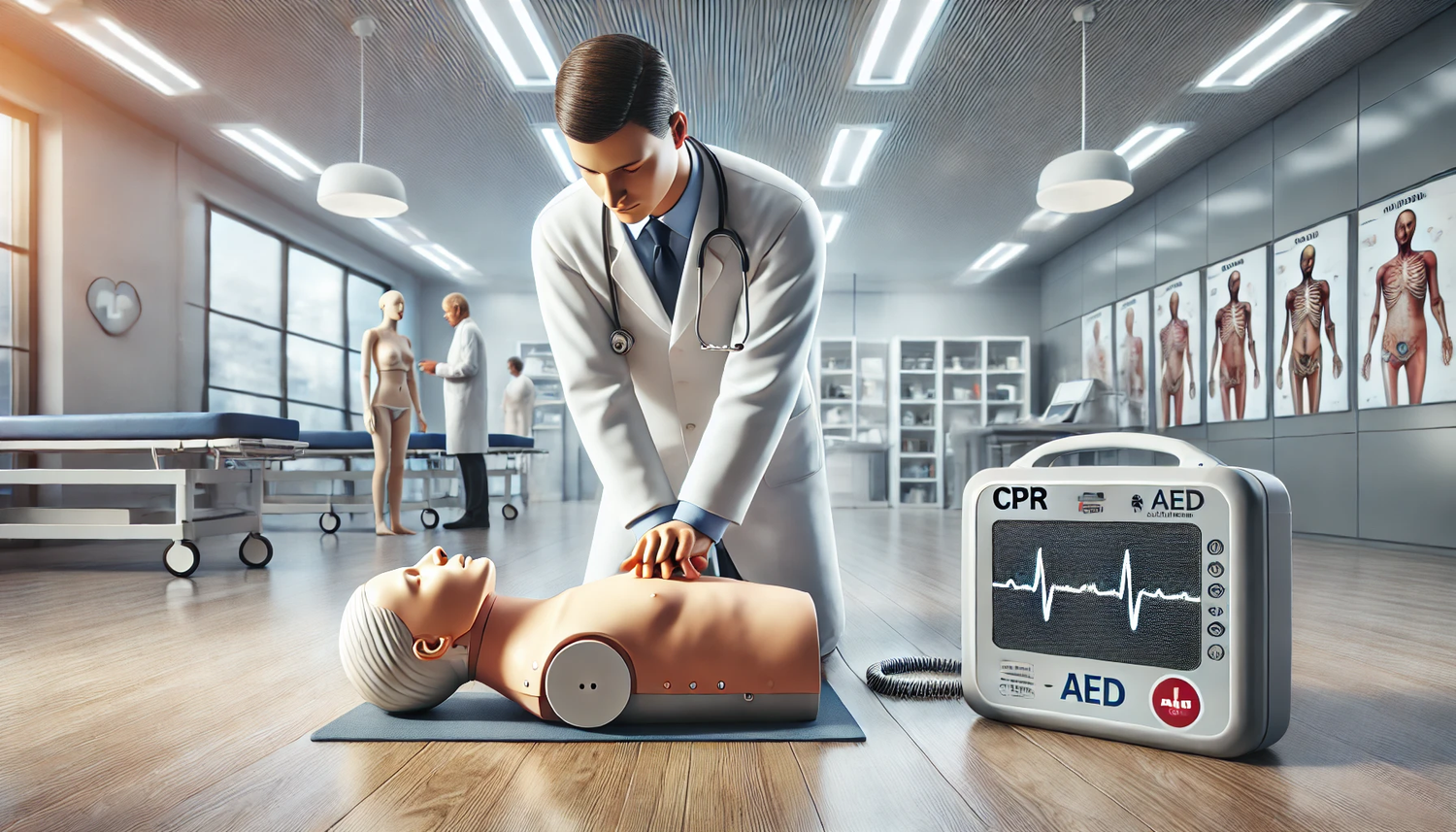
Section 1.1: Overview of BLS
Definition and Importance of Basic Life Support (BLS)
Basic Life Support (BLS) is a critical skill set utilized by healthcare providers, emergency responders, and even trained laypersons, to assist individuals who are experiencing life-threatening emergencies, particularly cardiac arrest, respiratory failure, or airway obstruction. The core of BLS is the preservation of life through the stabilization of vital functions until advanced care can be administered. It encompasses a variety of non-invasive emergency procedures that are fundamental in the initial response to a life-threatening event.
The importance of BLS cannot be overstated. In medical emergencies, particularly in cases of sudden cardiac arrest, the chances of survival diminish rapidly with each passing minute without intervention. Cardiac arrest, where the heart ceases to pump blood effectively, leads to the deprivation of oxygen to vital organs, including the brain. This can result in irreversible brain damage within minutes. BLS procedures, particularly cardiopulmonary resuscitation (CPR) and the use of an automated external defibrillator (AED), are pivotal in maintaining circulation and breathing until the heart can be restarted or professional medical help arrives. The immediate application of BLS has been shown to significantly improve survival rates and outcomes in cardiac arrest cases.
The essence of BLS revolves around the basic 'Chain of Survival', a series of actions that, when performed in sequence, greatly increase the likelihood of survival following cardiac arrest. This chain includes immediate recognition of cardiac arrest and activation of the emergency response system, early CPR with an emphasis on chest compressions, rapid defibrillation, effective advanced life support, and integrated post-cardiac arrest care. Each link in this chain is crucial, and BLS essentially forms the first few links. Recognizing an emergency and initiating CPR immediately keeps blood and oxygen flowing to the heart and brain, buying precious time until further medical treatment can be provided.
Moreover, BLS is not only vital in a healthcare setting but also in the community. Cardiac arrests can happen anywhere, at any time, and often occur outside of hospitals. Community members trained in BLS can become invaluable first responders, providing immediate assistance that can make the difference between life and death. This highlights the importance of widespread BLS training and awareness.
Furthermore, BLS training also covers aspects of assessing a patient's condition, managing an airway, and providing rescue breaths. This is essential knowledge for handling a range of emergencies, such as drowning, choking, or drug overdoses, where the problem might stem primarily from the inability to breathe. Understanding how to clear an airway obstruction or provide effective ventilations can save lives in these scenarios.
BLS protocols are regularly updated based on scientific research and are designed to be simple yet effective, ensuring they can be widely taught and applied. The simplicity of BLS procedures means that they can be learned and executed by a broad range of people, not just healthcare professionals. This accessibility is vital in a society where the likelihood of encountering someone in need of immediate emergency care is not insignificant.
BLS vs. Advanced Life Support (ALS)
Understanding the distinction between Basic Life Support (BLS) and Advanced Life Support (ALS) is crucial for medical professionals, emergency responders, and even laypersons undertaking emergency care training. This distinction not only clarifies the scope of care that individuals are trained and authorized to provide but also delineates the escalation of care necessary in critical medical situations.
Basic Life Support (BLS)
BLS refers to the initial level of medical care provided in a life-threatening situation, such as a cardiac arrest, respiratory distress, or choking, before more comprehensive medical care is available. It encompasses a range of simple, yet vital, medical procedures that can be performed without invasive interventions or the use of complex medical equipment.
Core Components of BLS: The primary focus of BLS is to maintain patient circulation and breathing through CPR (Cardiopulmonary Resuscitation) and the use of an AED (Automated External Defibrillator). CPR is a manual effort to restore partial flow of oxygenated blood to the brain and heart. The procedure involves rhythmic pressing on the patient's chest to manually pump the heart, interspersed with rescue breaths to oxygenate the blood. The use of an AED helps to treat sudden cardiac arrest. It’s a portable device that checks the heart's rhythm and can send an electric shock to the heart to try to restore a normal rhythm.
Training and Scope: BLS certification, typically required for healthcare professionals, first responders, and in many cases, public safety workers, covers skills including effective chest compressions, ventilation techniques, use of an AED, and basic airway management. BLS is also valuable for the general public as these skills can be life-saving in emergency situations occurring outside medical settings. The training focuses on quick response, accuracy in performing procedures, and working effectively under pressure.
Application in Emergencies: In a real-world scenario, a BLS-trained individual is equipped to assess the situation, determine if the victim needs CPR, deliver high-quality chest compressions, provide rescue breathing, and use an AED. This immediate response is vital in the critical first few minutes of an emergency like a cardiac arrest, where every second counts.
Advanced Life Support (ALS)
ALS is a step above BLS and involves more advanced medical procedures. Typically performed by trained medical professionals like paramedics, nurses, and doctors, ALS includes a wider range of life-saving techniques and the use of advanced equipment.
Core Components of ALS: ALS includes all the elements of BLS but adds advanced airway management (like endotracheal intubation), the ability to provide intravenous fluids and medications, and the application of manual defibrillation. ALS providers also interpret electrocardiograms (ECGs), use external pacemakers, and perform other advanced assessments and treatments.
Training and Scope: ALS certification requires a higher level of medical training, usually involving extensive coursework and practical training in a clinical setting. ALS providers are trained to make more complex medical decisions and to manage a patient's care until they can be transferred to a hospital for further treatment. This level of training is typically pursued by healthcare professionals who will be working in emergency medicine, intensive care, or in roles where advanced emergency response capabilities are required.
Application in Emergencies: ALS is crucial in more complex medical emergencies where BLS interventions alone are not sufficient. For instance, in a cardiac arrest situation, an ALS provider could administer life-saving medications, perform advanced airway management, or make critical decisions about the patient's care based on their assessment and monitoring. ALS interventions are often pivotal in stabilizing patients in severe medical emergencies, providing a bridge to definitive medical treatment.
Section 1.2: Legal and Ethical Considerations
Consent
Consent is a fundamental concept in medical ethics and law, and its importance in Basic Life Support (BLS) cannot be overstated. Understanding and appropriately applying the principles of consent can significantly affect the outcome of emergency care, both in terms of patient well-being and legal compliance. In the context of BLS, consent takes on unique considerations due to the nature of emergencies.
The Concept of Consent in Emergency Care
Consent in healthcare typically means that a patient agrees to undergo a particular medical procedure or treatment after being informed about its risks, benefits, and alternatives. In emergency situations, especially those requiring BLS, the process of obtaining consent can be complicated by factors such as the patient's consciousness level, the urgency of the situation, and the availability of family members or legal guardians.
Informed Consent: In scenarios where a patient is conscious and capable of making decisions, it is crucial to obtain informed consent before administering any form of treatment. This involves explaining the nature of the emergency intervention, its necessity, possible risks, and expected outcomes. For instance, if a conscious person has chest pain and BLS responders suspect a heart attack, it's important to explain the steps of the intervention, like administering aspirin and the reason behind it.
Implied Consent: In many emergency situations, especially those requiring immediate BLS intervention, the patient may be unconscious or unable to communicate their consent. In such cases, consent is legally and ethically considered to be implied. The rationale behind implied consent is that a reasonable person would consent to receive emergency medical assistance if they were able to do so. Therefore, BLS providers are ethically and legally permitted to administer life-saving interventions without explicit consent from the patient.
Refusal of Care: It's also important to recognize situations where a conscious patient refuses care. Adults with decision-making capacity have the right to refuse medical treatment, even if that decision might result in severe harm or death. In these cases, BLS providers must respect the patient’s wishes, provided the patient is informed and understands the consequences of refusing care. Documenting the refusal, when possible, is an important step in these situations.
Legal Aspects of Consent in BLS
The legal aspects of consent in BLS are shaped by both statutory and common law. These laws are designed to protect both the patient and the healthcare provider.
Good Samaritan Laws: These laws are relevant in many regions and provide legal protection to bystanders who come to the aid of others in an emergency. Good Samaritan laws often include provisions that apply to situations where consent cannot be obtained, such as when a person is unconscious. These laws typically protect rescuers from liability as long as they act in good faith, within the scope of their knowledge and training, and without gross negligence.
Minors and Incapacitated Adults: Special considerations apply when dealing with minors or adults who are not capable of making informed decisions. In these cases, consent is usually obtained from a parent, guardian, or other legal authority. However, in emergency situations where delaying treatment could result in harm, and a legal guardian is not present, BLS providers may proceed with necessary interventions under the doctrine of implied consent.
Ethical Considerations in Consent
The ethical considerations surrounding consent in BLS are centered on respect for patient autonomy, beneficence, and non-maleficence. These principles guide healthcare providers in making decisions that respect the patient's rights while also providing the best possible care.
Autonomy and Beneficence: Respecting autonomy means honoring a patient's right to make decisions about their own body and medical treatment. However, in emergency situations requiring BLS, the principle of beneficence, which refers to actions that promote the well-being of others, often takes precedence, especially when the patient is unable to make decisions.
Informed Refusal: Ethically, patients have the right to make informed decisions about their care, including the right to refuse treatment. Healthcare providers must ensure that patients are making informed refusals, meaning that they understand the implications and consequences of refusing care. This can be challenging in emergency situations but remains a critical aspect of ethical practice.
Good Samaritan Laws
In the context of Basic Life Support (BLS), understanding Good Samaritan Laws is essential for anyone who may find themselves in a position to provide emergency medical assistance. These laws play a critical role in emergency care, as they are designed to encourage bystanders to assist those in need without fear of legal repercussions.
Origin and Purpose of Good Samaritan Laws
Good Samaritan Laws are named after the biblical parable of the Good Samaritan, in which a traveler provides aid to a wounded man. These laws are enacted to protect individuals who offer help during an emergency. The primary purpose is to reduce bystanders' hesitation to assist, due to fear of being sued or prosecuted for unintentional injury or wrongful death.
Protection from Liability: These laws typically offer legal protection to people who provide reasonable assistance to those who are, or they believe to be, injured, ill, in peril, or otherwise incapacitated. The protection is generally provided for those who offer help without expectation of payment or other reward. It's important to note that these laws do not protect against gross negligence or willful misconduct.
Variation by Jurisdiction: The specifics of Good Samaritan Laws can vary significantly from one jurisdiction to another. In some regions, these laws are quite comprehensive, offering protection to anyone who provides aid, while in others, they might only apply to medically trained individuals or have other specific conditions. It is crucial for BLS providers to familiarize themselves with the laws specific to their area or any area where they might provide care.
Encouraging Emergency Assistance: The underlying rationale of these laws is to encourage more people to assist in emergencies. By offering legal protection, Good Samaritan Laws aim to reduce the bystander effect – a social psychological phenomenon wherein individuals are less likely to offer help to a victim when other people are present.
Legal Implications in BLS Situations
When it comes to BLS, the legal implications of Good Samaritan Laws are particularly relevant. These laws can influence decisions made in high-pressure situations, where quick action can save lives.
Scope of Protection: In general, Good Samaritan Laws protect individuals who act in an emergency to help others, as long as their actions are in line with the level of training they have received. For example, a person trained in BLS should provide care within the scope of BLS protocols. If they attempt procedures for which they are not trained, they may not be protected by these laws.
Consent and Refusal of Care: These laws also intersect with the concept of consent in emergency care. If a conscious person refuses care, the rescuer should respect their wishes, as providing care against someone's will might not be protected under Good Samaritan Laws. However, if the individual is unconscious or unable to communicate, the law typically allows for implied consent, assuming that the person would wish to receive emergency assistance.
Documentation and Reporting: While Good Samaritan Laws offer protection, it's advisable for rescuers to document their actions whenever possible and report the incident to professional medical responders once they arrive. This documentation can be crucial if there are any questions or legal actions following the incident.
Ethical Considerations and Public Education
Beyond the legal aspects, Good Samaritan Laws also touch on ethical considerations. They align with the ethical principle of beneficence – doing good – by providing legal reassurance to those willing to help.
Public Awareness and Education: Increasing public awareness and understanding of Good Samaritan Laws is important. People are often unaware of the legal protections available to them, which can contribute to hesitation in providing emergency assistance. Education campaigns and BLS training programs often include information on these laws to ensure that potential rescuers are both skilled and confident in their legal protections.
Moral and Ethical Duty to Act: While legal protection is a significant aspect of these laws, they also highlight the moral and ethical duty individuals have to assist others in emergencies. This aspect of the law serves to reinforce societal values of mutual aid and community responsibility.
Balancing Legal Protection and Responsible Care: It is important for individuals providing emergency care under the protection of Good Samaritan Laws to balance their legal protections with the responsibility to provide care that is within their scope of knowledge and training. The intent of these laws is not to encourage reckless behavior but to support responsible, well-intentioned assistance in emergency situations.
Do Not Resuscitate Orders and CPR
In Basic Life Support (BLS), understanding the implications of Do Not Resuscitate (DNR) orders is crucial. These orders significantly impact how responders approach resuscitation efforts, especially in the context of administering CPR. It’s essential for BLS providers to comprehend what a DNR order means, the legal and ethical considerations surrounding it, and how it influences decision-making in emergency situations.
Understanding Do Not Resuscitate (DNR) Orders
DNR orders are specific medical orders written by a doctor which state that cardiopulmonary resuscitation (CPR) should not be performed in the event of cardiac or respiratory arrest. These orders are made in consultation with the patient or their healthcare proxy or guardian and are part of advance care planning.
Purpose and Rationale of DNR Orders: DNR orders are often established for patients with terminal illnesses, advanced stage chronic diseases, or situations where the likelihood of a successful resuscitation is exceedingly low and the quality of life post-resuscitation is a major concern. The purpose is to respect the patient’s autonomy and their right to refuse medical treatment that they deem undesirable or burdensome. For many, a DNR order represents a decision to focus on the quality of life rather than extending it at any cost.
Legal Status of DNR Orders: The legal status of DNR orders varies by jurisdiction, but they are generally recognized and respected across healthcare settings. It is crucial for BLS providers to understand that a DNR order is legally binding. If a valid DNR order is present, healthcare providers are obligated to comply with it. Failure to do so can result in legal action for battery or medical malpractice.
Identifying Valid DNR Orders: In emergency situations, identifying the presence of a DNR order can be challenging. BLS providers should be trained to quickly and effectively identify valid DNR documentation. It’s important to note that different regions and healthcare systems may have varying formats for these orders. Some regions use bracelets or other identifiers for patients with DNR orders. In the absence of clear evidence of a DNR order, BLS providers should proceed with standard resuscitation procedures.
Ethical Considerations in Respecting DNR Orders
The decision to honor DNR orders also involves ethical considerations. It requires balancing the principles of respecting patient autonomy with the duty to preserve life.
Respecting Patient Autonomy: One of the fundamental principles of medical ethics is respecting the patient's right to self-determination. In the context of DNR orders, this means respecting the patient's decision to decline resuscitation. For healthcare providers, this can be challenging, especially in emergency situations where the instinct is to do everything possible to save a life. However, honoring a DNR order is a respect for the patient’s informed decision about their own health care.
Communication and Documentation: Clear communication and documentation are essential in dealing with DNR orders. This includes not only the communication between the patient and the healthcare provider when establishing the DNR order but also among healthcare providers themselves. Effective documentation ensures that the patient's wishes are clearly understood and followed.
Ethical Dilemmas: BLS providers may face ethical dilemmas, particularly in situations where the patient’s wishes are not clearly documented, or family members are present and express wishes contrary to the DNR order. In such cases, providers must use their judgment, based on training, legal guidance, and the specific circumstances at hand.
Practical Implications in BLS Scenarios
In BLS scenarios, the presence of a DNR order significantly impacts the approach to care. It’s crucial for providers to understand how to proceed in these situations.
Responding to a Cardiac Arrest with a DNR Order: If a patient has a valid DNR order and experiences cardiac arrest, CPR should not be initiated. Instead, the focus should shift to providing comfort care and supporting the patient in other ways, if possible. This might include managing pain, addressing breathing difficulties, or simply being present with the patient.
Uncertainty and Emergency Response: If there is uncertainty about the existence or validity of a DNR order, or if such an order cannot be immediately verified in an emergency, BLS providers are generally advised to proceed with resuscitation. The principle of erring on the side of preserving life is typically followed in ambiguous situations.
Training and Preparedness: BLS training should include education on recognizing and understanding DNR orders, as well as the legal and ethical implications of these orders. Scenarios and simulations involving DNR orders can prepare providers for the complex decisions they might face in real-life situations.
Section 1.3: BLS for Different Age Groups
BLS for Infants
Basic Life Support (BLS) for infants, which refers to children under the age of one year, requires specific techniques and considerations. Infants have different anatomical and physiological characteristics compared to older children and adults, which necessitates a tailored approach to BLS. Understanding the nuances of BLS for infants is crucial for anyone who may be in a position to provide emergency care to a child of this age group.
Understanding Infant Anatomy and Physiology
Before delving into the specific techniques of BLS for infants, it's essential to understand how their anatomical and physiological characteristics differ from those of older children and adults. These differences significantly impact how BLS should be administered.
Airway Differences: Infants have smaller and more flexible airways than older children and adults. Their tongues are relatively larger, and their tracheas are narrower, which increases the risk of airway obstruction. The larynx is higher in the neck, and the epiglottis is floppier, which means care must be taken to avoid blocking the airway when attempting to open it. These anatomical differences necessitate gentle handling during any intervention to prevent causing harm or further obstructing the airway.
Breathing Patterns and Lung Capacity: Infants are primarily diaphragmatic breathers and have a higher oxygen demand due to their faster metabolism. Their lung capacity is smaller, and the ribs are more horizontal, which affects the mechanics of breathing. This means that any respiratory distress can rapidly lead to respiratory failure, making early intervention critical.
Circulatory Considerations: An infant's heart rate is higher than that of older children and adults, and their blood volume is proportionately smaller. This means that any loss of blood or fluid can have a more significant impact on their circulatory system. Additionally, their cardiovascular system is less able to compensate for shock, whether due to blood loss, respiratory issues, or dehydration.
Techniques for BLS in Infants
BLS for infants includes several key techniques, adapted to their unique anatomy and physiology. These include assessing the infant, performing chest compressions, and providing rescue breaths.
Assessment: The first step in infant BLS is to assess the infant's responsiveness and breathing. Gently tap the infant's foot and check for any response, such as movement or a cry. Look for normal breathing, not just occasional gasps. If the infant is unresponsive and not breathing normally, call for emergency medical help immediately.
Chest Compressions: If the infant is unresponsive and not breathing or only gasping, begin chest compressions. Use two fingers (the index finger and middle finger) to compress the chest at the nipple line. Press down about 1.5 inches, at a rate of 100-120 compressions per minute. Allow the chest to fully recoil between compressions. The depth and rate of compressions are critical for ensuring effective circulation.
Rescue Breaths: After 30 compressions, provide two rescue breaths. To do this, open the airway using a head-tilt-chin-lift maneuver, being careful not to tilt the head too far back. Seal your mouth over the infant's mouth and nose and gently blow for about one second, watching for the chest to rise. If the chest doesn't rise with the first breath, reposition the head and try again.
Special Considerations and Challenges
Administering BLS to infants comes with special considerations and challenges that caregivers and emergency responders must be prepared for.
Emotional Challenges: Providing emergency care to an infant can be emotionally challenging, especially for parents or caregivers. It's important to stay calm and focused, remembering that effective BLS can be life-saving.
Choking Hazards: Infants are at a higher risk of choking due to their tendency to put objects in their mouths. If an infant is choking and conscious, administer five back slaps, followed by five chest thrusts. If the infant becomes unconscious, start CPR and look for an object in the mouth before giving rescue breaths.
SIDS and Safe Sleep: Infants are at risk for sudden infant death syndrome (SIDS), and BLS providers should be aware of safe sleep practices to reduce this risk. Always place infants on their backs to sleep and keep the crib free of loose bedding and soft toys.
BLS for Children
Basic Life Support (BLS) for children, typically defined as individuals from one year of age until puberty, requires specific considerations and techniques distinct from those used for adults or infants. This section of the course delves deeply into the nuances of providing BLS to children, exploring the physiological differences, the appropriate BLS techniques, and the unique challenges and considerations involved.
Understanding the Physiological Differences in Children
Children are not just small adults; their physiological differences significantly affect how their bodies respond to emergencies and how BLS should be administered. Recognizing these differences is crucial in providing effective BLS.
Airway and Breathing: Children have smaller airways compared to adults, making them more susceptible to obstruction. Their breathing is also more rapid, and they rely heavily on the diaphragm for respiration. This makes them more prone to respiratory distress and failure. The signs of respiratory distress in children, such as rapid breathing, noisy breathing, and increased effort to breathe, should be quickly identified and addressed.
Circulation and Heart Rate: Children typically have a faster heart rate than adults. When they experience blood loss or fluid depletion, their bodies compensate by increasing the heart rate even more. However, once their compensatory mechanisms are overwhelmed, their condition can deteriorate rapidly. This underscores the importance of early intervention in pediatric emergencies.
Response to Illness and Injury: Children may not exhibit signs and symptoms of illness or injury as clearly as adults. They might compensate well for a period before suddenly deteriorating. Therefore, it is vital to regularly reassess a child’s condition during a BLS situation and be prepared for rapid intervention if their condition worsens.
BLS Techniques for Children
The BLS techniques for children involve adaptations of the procedures used for adults, tailored to the child’s size and physiological needs. These include assessing the child, performing chest compressions, and delivering rescue breaths.
Assessment: The first step is to assess the child's responsiveness. Gently tap the child and ask loudly, “Are you okay?” If there is no response, check for breathing and signs of circulation. If the child is unresponsive and not breathing normally, call for emergency assistance immediately.
Chest Compressions: If the child is unresponsive and not breathing or only gasping, begin chest compressions. Use one hand (or two if necessary for a larger child) to compress the chest at the lower half of the breastbone. The depth of the compressions should be about one-third of the chest’s diameter, approximately 2 inches. Maintain a compression rate of 100-120 compressions per minute, ensuring full recoil of the chest between compressions.
Rescue Breaths: After every 30 compressions, give 2 rescue breaths. Tilt the child's head back slightly and lift the chin to open the airway. Pinch the nose closed, take a normal breath, and make a complete seal over the child’s mouth. Blow into the mouth for 1 second, watching for chest rise. If the chest doesn’t rise, reposition the head and try again. If there’s a suspected neck injury, use the jaw-thrust maneuver instead of tilting the head.
Special Considerations and Challenges in Pediatric BLS
Administering BLS to children comes with unique challenges and considerations. It’s crucial to be aware of these to ensure the child receives the best possible care.
Emotional and Psychological Factors: Dealing with a child in a medical emergency can be emotionally challenging for both the caregiver and the bystander. Children can be frightened and uncooperative, making it difficult to assess and treat them. It's important to approach the child in a calm and reassuring manner, explaining what you are doing in simple terms.
Choking Hazards: Children are prone to choking on small objects and food. If a child is conscious but cannot breathe, cough, or speak, perform abdominal thrusts (Heimlich maneuver) until the obstruction is relieved. If the child becomes unconscious, start CPR and look for an object in the mouth before giving rescue breaths.
Dealing with Trauma: Children are more susceptible to head injuries due to the proportionally larger size of their heads. In cases of trauma, extra care should be taken to stabilize the head and neck. Avoid moving the child unnecessarily and provide BLS with the utmost care to avoid exacerbating any injuries.
BLS for Adults
Basic Life Support (BLS) for adults is a crucial aspect of emergency medical care, designed to aid individuals experiencing life-threatening events such as cardiac arrest, choking, or drowning. This section of the course delves into the specific techniques and considerations for administering BLS to adults, providing a comprehensive understanding essential for any BLS practitioner.
Understanding the Adult Response in Emergencies
Adults, typically defined as individuals from puberty onwards, have specific physiological responses to emergencies that influence the application of BLS techniques. Understanding these responses is crucial in effectively administering BLS.
Cardiac Arrest in Adults: The most common cause of cardiac arrest in adults is heart disease, particularly coronary artery disease. During cardiac arrest, the heart stops beating effectively, halting blood flow to vital organs including the brain. Quick initiation of BLS procedures, especially chest compressions and defibrillation, is essential in increasing the chance of survival. The adult body requires firm compressions during CPR to ensure effective blood flow.
Respiratory Distress and Failure: Adults experiencing respiratory distress may show signs such as gasping, wheezing, or inability to speak in full sentences. Causes can range from asthma to pulmonary embolism. In BLS, ensuring the airway is open and clear, and providing rescue breaths if necessary, are key steps in managing respiratory issues.
Differences in Physical Characteristics: Physical variations like body size, presence of chronic illnesses, or physical fitness can affect the administration of BLS. For example, delivering chest compressions to a very muscular or overweight individual may require different positioning or additional force.
BLS Techniques for Adults
The core techniques of BLS for adults include the assessment of the individual, performing chest compressions, and delivering rescue breaths. Each of these steps is critical in the chain of survival.
Assessment and Activation of Emergency Response: The first step is to assess the adult's responsiveness. If the person is unresponsive, check for breathing. If the person is not breathing or only gasping, this is a sign of cardiac arrest, and emergency services should be called immediately. If possible, send someone else to call and retrieve an AED while you begin CPR.
Chest Compressions: Place the heel of one hand on the center of the person’s chest, put your other hand on top, interlocking your fingers. Position your body directly over your hands, with arms straight, and use your body weight to help compress the chest at least 2 inches deep at a rate of 100-120 compressions per minute. It's crucial to allow the chest to recoil completely between compressions to let the heart refill with blood.
Rescue Breaths: After every 30 chest compressions, open the airway using the head-tilt-chin-lift maneuver and give 2 rescue breaths. Pinch the nose shut, and cover the person’s mouth with yours, making a complete seal. Blow into the mouth for about one second, ensuring the chest rises visibly. If the chest does not rise with the first breath, reposition the head and try again.
Special Considerations and Challenges
Administering BLS to adults involves several special considerations and challenges that responders must be prepared to address.
Dealing with Varied Body Types: Adults come in a wide range of body types, which can present challenges in delivering effective chest compressions. For instance, obese individuals might require a slightly different hand positioning or more force. It's important to be adaptable and use the technique that best suits the individual's body type.
Managing Agonal Breaths: Sometimes, a person in cardiac arrest may have irregular, gasping breaths known as agonal breaths. These should not be mistaken for effective breathing. If agonal breaths are present, continue with CPR, as this is still a sign of cardiac arrest.
Emotional and Psychological Factors: Providing BLS, especially to a known person or in a public setting, can be emotionally taxing. It's important to remain focused on the steps of BLS and not allow emotional factors to interfere with the provision of care.
 UKPRN 10092631