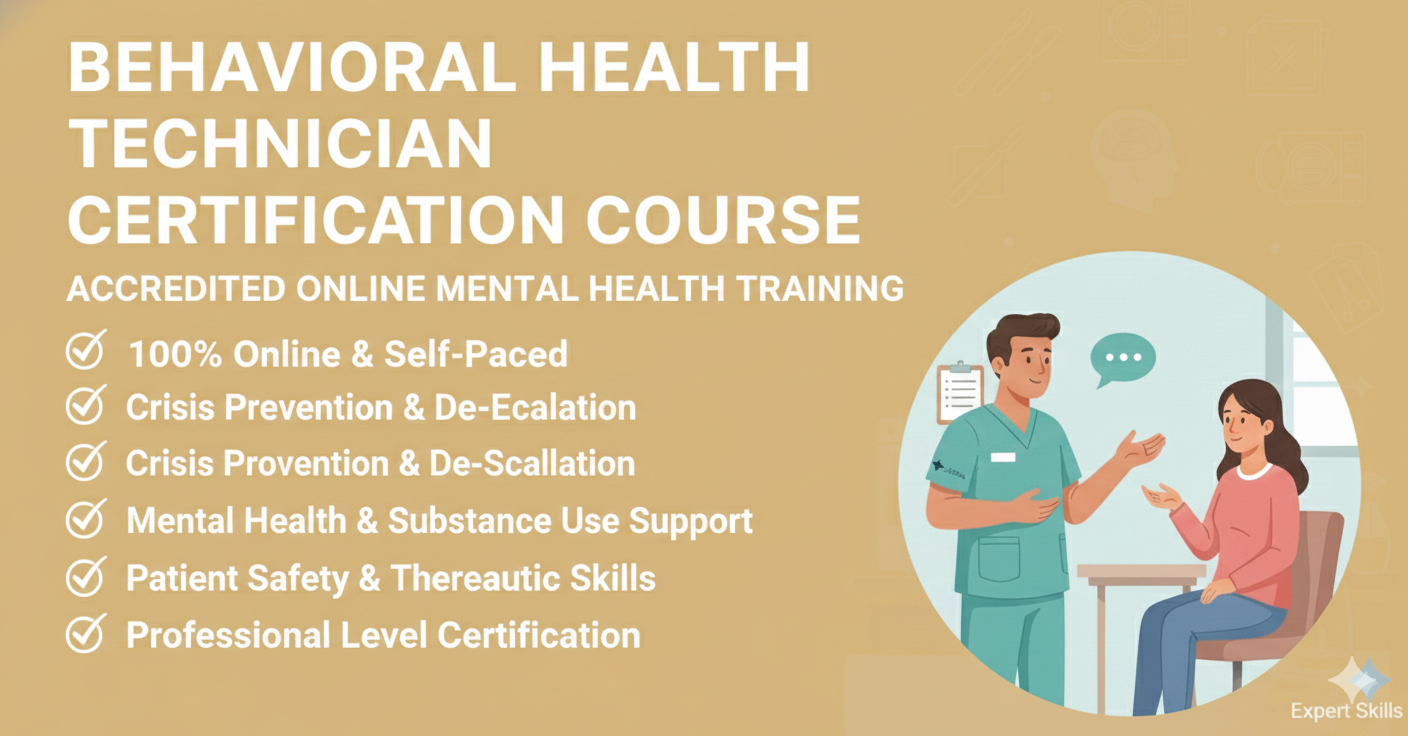
Behavioral health is a broad, integrated field of care that focuses on how thoughts, emotions, behaviors, biology, and social environments interact to influence a person’s overall functioning and well-being. Unlike narrow definitions that equate behavioral health solely with mental illness, behavioral health encompasses mental health conditions, substance use disorders, emotional regulation, coping skills, trauma responses, and the behavioral aspects of physical health. For a Behavioral Health Technician (BHT), understanding what behavioral health truly means is foundational. Every interaction, observation, safety decision, and documentation entry is grounded in these core concepts.
At its core, behavioral health recognizes that human behavior is meaningful. Behaviors—even those that appear irrational, disruptive, or self-defeating—often serve a function. They may reduce distress, communicate unmet needs, protect against perceived threats, or reflect underlying biological or psychological processes. Behavioral health care does not begin by asking, “What is wrong with this person?” Instead, it asks, “What has happened to this person, what are they experiencing now, and what support will help them function more safely and effectively?” This shift in perspective is essential for BHTs, who are often the staff members closest to patients throughout the day.
Behavioral health also differs from purely medical models in its emphasis on patterns over time. While acute medical care often focuses on diagnosing and treating a specific problem, behavioral health care looks at how symptoms emerge, fluctuate, and respond to stressors, environments, and relationships. A person’s mood, behavior, and coping abilities may change hour by hour or day by day. As a result, behavioral health care relies heavily on observation, consistency, structure, and supportive relationships. BHTs play a critical role in this process by providing real-time information about behavior, engagement, and safety that informs clinical decision-making.
One of the most important concepts in behavioral health is the distinction between symptoms and identity. A person is not their diagnosis. Depression, schizophrenia, substance use disorder, or trauma-related symptoms describe patterns of experience and behavior—not the totality of who a person is. This distinction shapes professional language and attitudes in behavioral health settings. Terms like “a person with schizophrenia” or “an individual experiencing substance use disorder” reflect a commitment to dignity and respect. For BHTs, adopting this mindset is not optional; it is central to ethical, effective care.
Behavioral health treatment is goal-oriented, but goals are not limited to symptom elimination. While reducing distressing symptoms is important, behavioral health care also prioritizes functional improvement. This includes the ability to manage emotions, maintain safety, engage in daily activities, build relationships, and participate meaningfully in life. Treatment goals may focus on stabilizing mood, reducing harmful behaviors, improving communication, increasing insight, or strengthening coping skills. Many goals are incremental and realistic rather than absolute. For example, a goal may be to reduce the frequency or intensity of self-harm urges rather than eliminate them entirely in the short term.
Another central treatment goal in behavioral health is safety. Safety is multi-layered and applies to the individual, peers, staff, and the broader environment. Behavioral health settings are designed to minimize risk while supporting autonomy as much as possible. Safety planning, observation levels, environmental controls, and clear expectations are all tools used to maintain safety. BHTs are often responsible for implementing these safety measures consistently, making their understanding of safety principles essential.
Behavioral health treatment also emphasizes skill development. Many individuals receiving behavioral health services have not had consistent opportunities to learn or practice healthy coping strategies. Treatment often involves teaching skills such as emotional regulation, distress tolerance, communication, problem-solving, and impulse control. These skills are practiced repeatedly in structured environments, with staff modeling and reinforcing their use. BHTs frequently support this process by prompting skill use, reinforcing progress, and observing barriers to success.
Recovery is a core organizing principle in modern behavioral health care. Recovery does not mean the absence of all symptoms or the return to a pre-illness state. Instead, recovery is defined as a process through which individuals improve their health and wellness, live self-directed lives, and strive to reach their full potential. Recovery is highly individualized. For one person, recovery may involve returning to work or school. For another, it may involve maintaining sobriety, improving relationships, or learning to manage symptoms without hospitalization.
Recovery-oriented care emphasizes hope, autonomy, and collaboration. Individuals are viewed as active participants in their care rather than passive recipients of treatment. Their preferences, values, and goals are respected whenever possible. This does not mean that all choices are risk-free or that safety measures are abandoned. Rather, it means that care teams—including BHTs—work with individuals to balance safety with dignity and independence. For example, staff may involve a patient in developing a safety plan rather than imposing rules without explanation.
Several recovery models influence behavioral health practice. One widely used framework is the biopsychosocial model, which recognizes that biological, psychological, and social factors all contribute to mental health and behavior. Biological factors may include genetics, brain chemistry, and medical conditions. Psychological factors include thoughts, emotions, trauma history, and coping styles. Social factors encompass relationships, culture, socioeconomic status, housing, and access to support. BHTs operate primarily within the psychological and social domains, but their observations often reveal interactions across all three areas.
Another influential approach is trauma-informed care. Trauma-informed care acknowledges that many individuals receiving behavioral health services have experienced trauma, including abuse, neglect, violence, discrimination, or systemic harm. Trauma can profoundly affect how people perceive safety, authority, and relationships. Trauma-informed care prioritizes physical and emotional safety, choice, collaboration, trustworthiness, and empowerment. For BHTs, this means understanding that behaviors such as withdrawal, aggression, or noncompliance may be trauma responses rather than intentional defiance.
The strengths-based model is also central to behavioral health recovery. Instead of focusing exclusively on deficits and problems, this model emphasizes individual strengths, resilience, and existing coping abilities. Even individuals experiencing severe symptoms often possess skills, interests, and personal values that can support recovery. BHTs contribute to strengths-based care by noticing and reinforcing positive behaviors, effort, and progress—no matter how small.
Behavioral health care is delivered across a continuum, ranging from prevention and early intervention to acute crisis stabilization and long-term support. Some individuals receive services temporarily during periods of acute distress, while others require ongoing support over years or even a lifetime. Treatment settings may change over time as needs evolve. A person may move from inpatient care to outpatient therapy, residential programs, community-based services, or peer support networks. Understanding this continuum helps BHTs contextualize their role within a larger system of care.
Importantly, behavioral health is not static. Knowledge, best practices, and societal attitudes continue to evolve. There has been increasing recognition of the role of social determinants of health, such as housing instability, poverty, discrimination, and lack of access to care. There is also growing emphasis on integrated care models that address mental health, substance use, and physical health together. As frontline support staff, BHTs must be adaptable, reflective, and committed to ongoing learning.
In practice, behavioral health is experienced not through abstract theories but through daily interactions: how staff speak to individuals in distress, how boundaries are maintained, how safety is ensured, and how dignity is preserved even in difficult moments. This is where the BHT’s understanding of behavioral health becomes operational. A strong conceptual foundation allows BHTs to respond thoughtfully rather than reactively, to support recovery rather than merely control behavior, and to function as reliable, professional members of the care team.
This section establishes the lens through which the entire course should be understood. Behavioral health is about people, patterns, and purpose. Treatment goals extend beyond symptom reduction to include safety, skill-building, and meaningful participation in life. Recovery is a process grounded in hope, collaboration, and respect. As you move forward in this course, these principles will repeatedly inform your responsibilities, decisions, and professional identity as a Behavioral Health Technician.
Module 1 Knowledge Check – Section 1
Behavioral health focuses primarily on:
A. Diagnosing mental illness only
B. The interaction of thoughts, emotions, behaviors, and environments
C. Medical treatment of physical disease
D. Eliminating all symptoms permanently
Which statement best reflects a recovery-oriented approach?
A. Recovery means symptoms must disappear completely
B. Recovery is the same for every individual
C. Recovery emphasizes hope, autonomy, and meaningful life goals
D. Recovery requires long-term hospitalization
The biopsychosocial model includes which components?
A. Biological factors only
B. Psychological and social factors only
C. Biological, psychological, and social factors
D. Environmental factors only
Trauma-informed care prioritizes all of the following EXCEPT:
A. Safety
B. Choice
C. Collaboration
D. Punishment
In behavioral health, behaviors are best understood as:
A. Random and meaningless
B. Intentional attempts to disrupt care
C. Serving a function or purpose
D. Always a sign of manipulation
A key goal of behavioral health treatment is:
A. Strict rule enforcement
B. Functional improvement and skill development
C. Eliminating patient autonomy
D. Avoiding documentation
Strengths-based care focuses on:
A. Diagnoses and deficits only
B. Punishing negative behaviors
C. Individual resilience and abilities
D. Staff authority over patients
Answer Key
B
C
C
D
C
B
C
 UKPRN 10092631