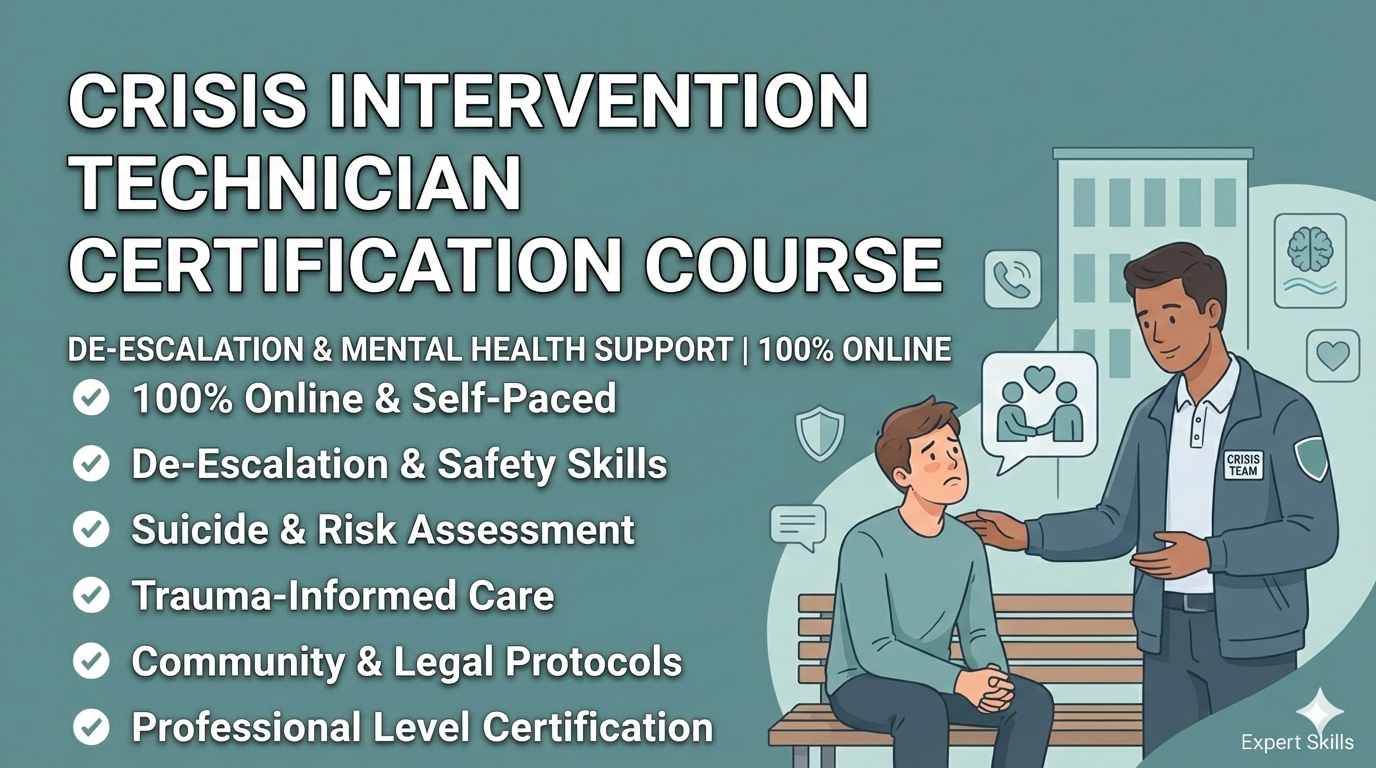
Crisis intervention is a structured, time-limited approach to supporting individuals who are experiencing an acute disruption in their ability to cope. A crisis occurs when a person’s usual problem-solving skills, emotional regulation, and support systems are overwhelmed by an internal or external stressor. This overwhelm leads to heightened emotional distress, impaired judgment, and, in some cases, behaviors that place the individual or others at risk of harm. Crisis intervention exists to interrupt this state safely, restore a basic level of stability, and connect the individual to appropriate ongoing supports.
At its core, crisis intervention is not therapy, counseling, diagnosis, or long-term treatment. It is an immediate, practical response designed to reduce danger, emotional intensity, and confusion in the moment. Crisis Intervention Technicians (CITs) operate in situations where time is limited, information is incomplete, and emotions are intense. The goal is not to “fix” the person or solve all underlying problems, but to stabilize the situation enough so that the individual can regain a sense of control and move forward safely.
A crisis can arise from many different circumstances. Common examples include suicidal thoughts or behaviors, acute panic or anxiety, psychotic episodes, substance intoxication or withdrawal, domestic conflict, traumatic events, sudden loss, medical emergencies that affect behavior, or environmental stressors such as homelessness or legal involvement. What defines a crisis is not the event itself, but the individual’s inability to cope effectively at that moment. Two people may experience the same event, yet only one enters crisis depending on their coping capacity, support system, health status, and prior experiences.
Crisis intervention is guided by a set of core goals that remain consistent across settings, populations, and situations. The first and most critical goal is safety. Safety refers to protecting the individual, the Crisis Intervention Technician, and anyone else present from immediate harm. This includes reducing the risk of suicide, violence, medical deterioration, or accidental injury. Safety always takes priority over comfort, rapport, or problem-solving. Without safety, no other intervention can be effective.
The second major goal of crisis intervention is stabilization. Stabilization means lowering emotional intensity to a manageable level, restoring basic orientation, and helping the individual move out of a survival-driven state. This may involve calming techniques, clear communication, reassurance, grounding strategies, and the removal of immediate stressors or triggers when possible. Stabilization does not mean that the person feels “better” or that distress disappears. It means the individual is able to think more clearly, communicate, and participate in decisions about next steps.
A third essential goal is assessment and clarification. During a crisis, information is often fragmented, distorted by emotion, or incomplete. Crisis intervention involves gathering enough accurate information to understand what is happening, what risks are present, and what resources are needed. This assessment is rapid and focused, emphasizing immediate risks rather than comprehensive history. CITs learn to identify key warning signs, protective factors, and situational dynamics without overwhelming the individual or delaying necessary action.
The final primary goal of crisis intervention is connection to support and continuity of care. Crisis intervention is inherently short-term. Once immediate safety and stabilization are achieved, the focus shifts to ensuring the individual is not left alone to manage unresolved risks. This may involve transferring care to clinical professionals, arranging emergency services, coordinating with family or support systems, or providing referrals to community resources. Effective crisis intervention ensures that the individual leaves the encounter with a clear plan, appropriate supervision, or access to ongoing help.
Underlying these goals are several core principles that guide ethical and effective crisis intervention practice. One of the most important principles is immediacy. Crisis intervention is designed to address what is happening right now. While past experiences may inform the situation, the focus remains on current thoughts, behaviors, risks, and needs. CITs avoid lengthy exploration of history unless it directly affects immediate safety or decision-making.
Another foundational principle is the use of the least restrictive and least invasive intervention necessary to ensure safety. Crisis intervention aims to support autonomy and dignity whenever possible. This means using verbal de-escalation before physical measures, encouraging voluntary cooperation before involuntary actions, and involving the individual in decisions to the extent they are able. Restrictive measures are used only when clearly necessary to prevent harm and are guided by policy, law, and ethical standards.
Respect for the individual’s dignity is a central principle of crisis intervention. Even in highly chaotic or dangerous situations, the person in crisis is treated as a human being deserving of respect, not as a problem to be controlled. Language, tone, body posture, and behavior all communicate whether a Crisis Intervention Technician views the individual as a partner in stabilization or as an adversary. Respect does not mean agreeing with harmful beliefs or behaviors; it means acknowledging the person’s experience without judgment or ridicule.
Crisis intervention is also grounded in a practical, problem-focused approach. Unlike long-term therapeutic models that explore deep emotional patterns or personality structures, crisis intervention concentrates on immediate barriers to safety and stability. CITs help individuals identify concrete next steps, such as who they can contact for support, where they can go to be safe, or what actions will reduce immediate risk. This approach helps prevent individuals from becoming overwhelmed by the magnitude of their situation.
Another key principle is time-limited involvement. Crisis intervention is intentionally brief. Prolonged engagement can increase dependency, blur professional boundaries, or delay access to appropriate care. CITs learn to work efficiently, balancing empathy with direction, and understanding when to transition responsibility to other professionals or systems. This time-limited nature protects both the individual and the technician from unrealistic expectations.
Crisis intervention is inherently collaborative. Even when individuals are distressed, confused, or resistant, the goal is to work with them rather than against them whenever possible. Collaboration may involve offering choices, explaining actions clearly, and seeking the individual’s input on what feels most helpful or safe. Collaboration increases cooperation, reduces resistance, and supports better outcomes.
It is also essential to understand what crisis intervention is not. Crisis intervention is not psychotherapy, even though it may use therapeutic communication skills. CITs do not diagnose mental illness, provide counseling, or develop long-term treatment plans. Crisis intervention is not punishment, discipline, or behavior control. The purpose is safety and stabilization, not enforcement of rules or moral judgment. Crisis intervention is also not rescue in the sense of taking responsibility for someone’s life. The technician’s role is to support and connect, not to replace the individual’s agency or ongoing care systems.
In practice, crisis intervention often unfolds in unpredictable environments. A Crisis Intervention Technician may encounter individuals who are angry, frightened, intoxicated, disoriented, or mistrustful of authority. The technician may have limited time, limited privacy, and limited information. Understanding the foundational definitions, goals, and principles of crisis intervention allows the CIT to remain grounded and purposeful even in chaotic circumstances.
By mastering these foundations, students begin to shift their mindset from reacting emotionally to responding professionally. They learn to see crisis behavior as communication of distress rather than personal attacks. They learn that effectiveness is measured not by how calm or compliant someone becomes, but by whether safety is maintained and appropriate next steps are achieved. This foundational understanding sets the stage for all subsequent skills, assessments, and interventions taught throughout the course.
Module 1 Knowledge Check – Section 1
1. What best defines a crisis in the context of crisis intervention?
A. Any stressful life event
B. A diagnosed mental illness
C. A situation in which coping skills are overwhelmed and functioning is impaired
D. A behavior that violates social norms
2. The primary goal of crisis intervention is:
A. Long-term emotional healing
B. Safety and immediate stabilization
C. Diagnosis and treatment planning
D. Behavior modification
3. Which of the following best describes stabilization during a crisis?
A. Eliminating all emotional distress
B. Convincing the person to change their beliefs
C. Reducing emotional intensity to allow clearer thinking and cooperation
D. Providing therapy to process trauma
4. Why is crisis intervention considered time-limited?
A. Because crises always resolve quickly
B. To avoid forming professional relationships
C. To prevent dependency and ensure transition to appropriate care
D. Because technicians lack advanced training
5. Which principle emphasizes using the least force or restriction necessary?
A. Immediacy
B. Collaboration
C. Least restrictive intervention
D. Time limitation
6. What is a Crisis Intervention Technician NOT responsible for?
A. Supporting immediate safety
B. Conducting rapid risk assessment
C. Providing long-term counseling
D. Connecting individuals to resources
7. Why is respect and dignity essential during crisis intervention?
A. It guarantees compliance
B. It reduces legal liability only
C. It helps maintain safety and cooperation while honoring the person as human
D. It replaces the need for boundaries
Answer Key
C
B
C
C
C
C
C
 UKPRN 10092631