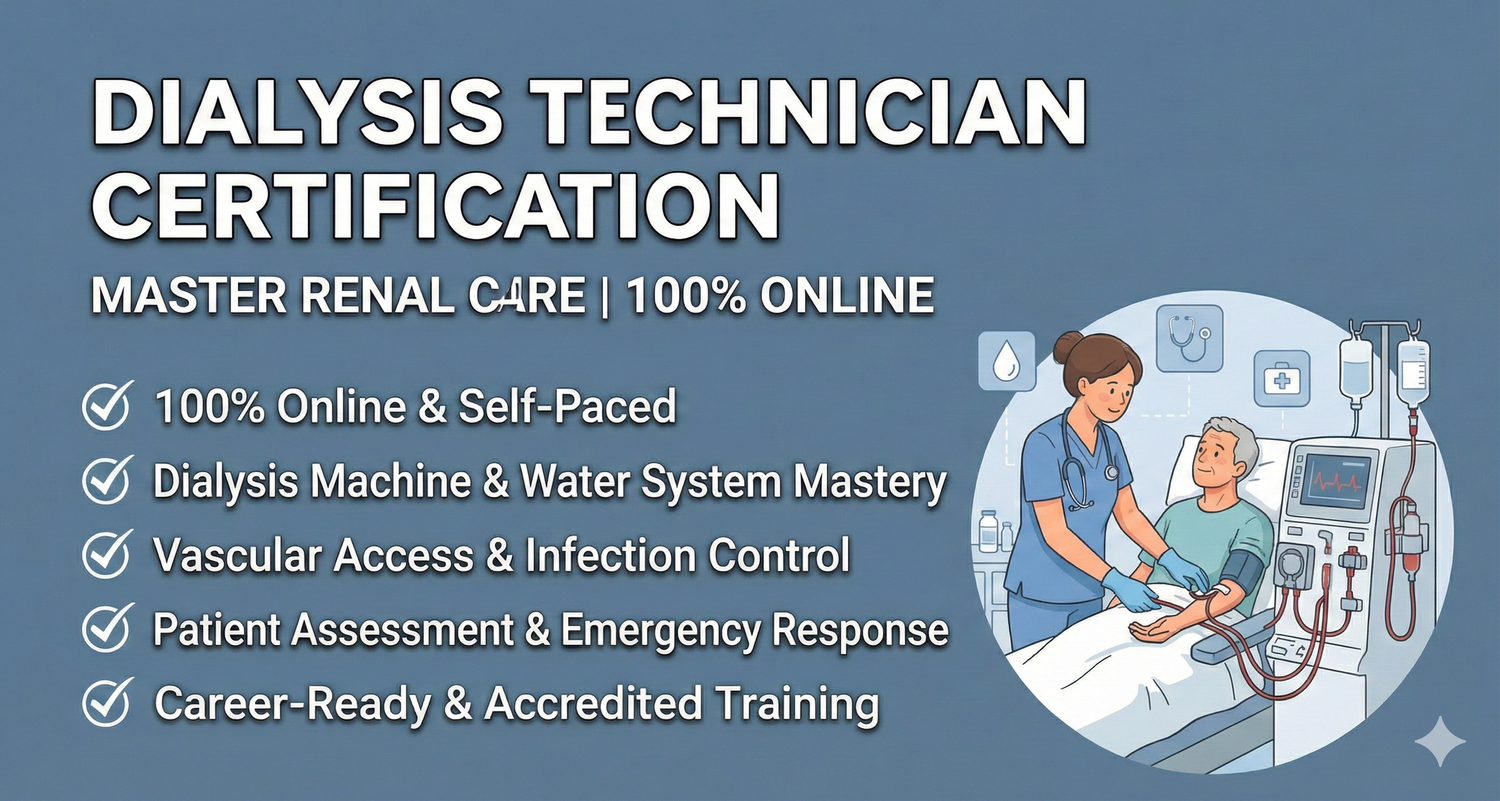
The dialysis technician plays a critical, hands-on role in the care of patients with kidney failure. This role is not auxiliary or minor—it is central to the safe delivery of life-sustaining treatment. Dialysis technicians are responsible for preparing equipment, initiating and monitoring dialysis treatments, observing patients for complications, maintaining strict infection control standards, and communicating essential information to licensed clinical staff. By the end of this section, you should clearly understand what the dialysis technician does each day, what tasks fall within the technician’s scope of practice, what tasks do not, and the professional standards that guide every action in a dialysis facility.
At its core, the dialysis technician role exists to ensure that dialysis treatments are delivered safely, accurately, and consistently according to physician orders and facility protocols. Patients receiving dialysis are medically fragile. Many have multiple chronic conditions such as diabetes, hypertension, heart disease, and vascular complications. Because of this, even small errors or lapses in attention can result in serious harm. The dialysis technician must therefore combine technical skill, clinical awareness, professionalism, and patient-centered care in every interaction.
The Dialysis Technician’s Daily Responsibilities
A dialysis technician’s day follows a structured workflow, but no two days are exactly the same. Each treatment session requires preparation, execution, monitoring, and follow-up, all of which must be performed precisely and documented accurately.
Before patients arrive, dialysis technicians are responsible for preparing the treatment area. This includes ensuring dialysis machines are clean, disinfected, and functioning properly, verifying that water treatment systems are operating within safe parameters, assembling bloodlines and dialyzers, and performing safety checks according to facility policy. These steps are not optional or routine shortcuts—they are essential safety measures that protect patients from contamination, air embolism, chemical exposure, and equipment failure.
When patients arrive, dialysis technicians assist with the intake process. This commonly includes verifying patient identity using approved identifiers, measuring and recording pre-treatment weight, obtaining vital signs such as blood pressure and pulse, and asking patients about symptoms they may be experiencing. While technicians do not diagnose conditions, they are expected to recognize abnormal findings and report them immediately to the nurse or charge staff. This observational role is one of the most important responsibilities of the technician.
During treatment initiation, dialysis technicians prepare the extracorporeal circuit, connect the patient to the dialysis machine using the prescribed vascular access, and ensure blood flow rates and machine settings match the treatment order. Throughout the treatment, technicians continuously monitor machine alarms, blood pressures, patient comfort, and access site integrity. Dialysis is dynamic, not static. A patient who appears stable at the beginning of treatment may develop complications such as hypotension, cramping, nausea, chest discomfort, or access issues. The technician must remain alert at all times.
After treatment, dialysis technicians assist with safely discontinuing therapy, returning the patient’s blood when appropriate, achieving hemostasis at the access site, and reassessing vital signs. Post-treatment documentation must be completed accurately, reflecting what occurred during the session, any complications, and any communication with nursing or medical staff. Finally, the technician cleans and disinfects the station in preparation for the next patient, following strict infection control protocols.
Scope of Practice: What Dialysis Technicians Can and Cannot Do
Understanding scope of practice is essential for patient safety, legal compliance, and professional integrity. The scope of practice defines which tasks a dialysis technician is authorized to perform and which tasks must be performed by licensed personnel such as nurses or physicians. Scope of practice is determined by state regulations, facility policies, training, and certification standards.
Dialysis technicians are generally authorized to perform technical and supportive clinical tasks. These include machine setup and operation, monitoring dialysis treatments, obtaining vital signs, assisting with vascular access cannulation if trained and permitted by facility policy, responding to machine alarms, documenting treatment data, and providing basic patient education within established guidelines. Technicians also play a key role in infection prevention, equipment maintenance, and emergency response under direction.
However, dialysis technicians do not independently assess patients, diagnose conditions, prescribe treatments, adjust physician orders, administer medications without authorization, or make clinical decisions outside established protocols. For example, while a technician may recognize that a patient’s blood pressure is dropping, the technician does not decide independently how to alter treatment parameters unless explicitly authorized by standing orders and supervised by licensed staff. Instead, the technician reports findings promptly and follows escalation procedures.
Operating outside scope of practice is dangerous and can result in patient harm, job termination, loss of certification, and legal consequences. Professional dialysis technicians are defined not only by what they can do, but by their judgment in knowing when to stop, report, and seek guidance.
Professional Standards and Expectations
Dialysis technicians are held to high professional standards because of the nature of the care they provide. These standards govern behavior, communication, appearance, accountability, and ethical conduct. Patients undergoing dialysis often attend treatment multiple times per week for years. This creates long-term relationships between patients and staff, making professionalism especially important.
Professional conduct begins with reliability. Dialysis treatments run on tight schedules, and staffing shortages can directly impact patient care. Technicians are expected to arrive on time, prepared, and mentally focused. Consistent attendance and punctuality are not administrative concerns—they are patient safety issues.
Communication is another cornerstone of professionalism. Dialysis technicians must communicate clearly with patients, families, nurses, and other members of the care team. This includes explaining procedures in simple terms, responding respectfully to patient concerns, and reporting clinical observations accurately and promptly. Documentation is a form of communication as well, and incomplete or inaccurate records can compromise care.
Professional boundaries must always be maintained. Dialysis technicians often develop close rapport with patients, but must avoid crossing boundaries related to personal relationships, financial involvement, medical advice outside scope, or inappropriate disclosures. Maintaining respectful, therapeutic relationships protects both patients and staff.
Ethical standards require honesty, integrity, and advocacy. Dialysis technicians must report errors, near misses, or unsafe conditions without fear or concealment. Ethical practice means prioritizing patient safety even when doing so is uncomfortable or inconvenient. It also means respecting patient autonomy, privacy, and dignity at all times.
The Technician as a Patient-Centered Care Provider
Although dialysis technicians focus heavily on technical tasks, their role is inherently patient-centered. Patients receiving dialysis often experience fear, fatigue, frustration, and loss of independence. Technicians are frequently the staff members who spend the most time with patients during treatments, positioning them uniquely to influence the patient experience.
Patient-centered care means recognizing the individual behind the diagnosis. It involves listening to patient concerns, responding with empathy, maintaining privacy, and supporting patient dignity. Simple actions—such as explaining what you are doing before touching an access site, ensuring comfort during treatment, or noticing changes in mood or behavior—can significantly impact patient well-being.
Dialysis technicians do not provide counseling or therapy, but they are expected to observe, support, and communicate concerns to the broader care team. In this way, technicians serve as both caregivers and advocates within the dialysis environment.
Building a Professional Identity as a Dialysis Technician
Becoming a dialysis technician is not simply learning how to operate machines. It is adopting a professional identity centered on safety, responsibility, and compassionate care. Technicians must continually refine their skills, stay informed about policies, and commit to lifelong learning. Certification is not the end of training—it is the foundation upon which professional competence is built.
By mastering the responsibilities, respecting scope of practice, and upholding professional standards, dialysis technicians become essential contributors to patient survival and quality of life. This role demands attention to detail, emotional resilience, ethical judgment, and teamwork. As you progress through this course, every module will build upon this foundational understanding of what it truly means to be a dialysis technician.
 UKPRN 10092631