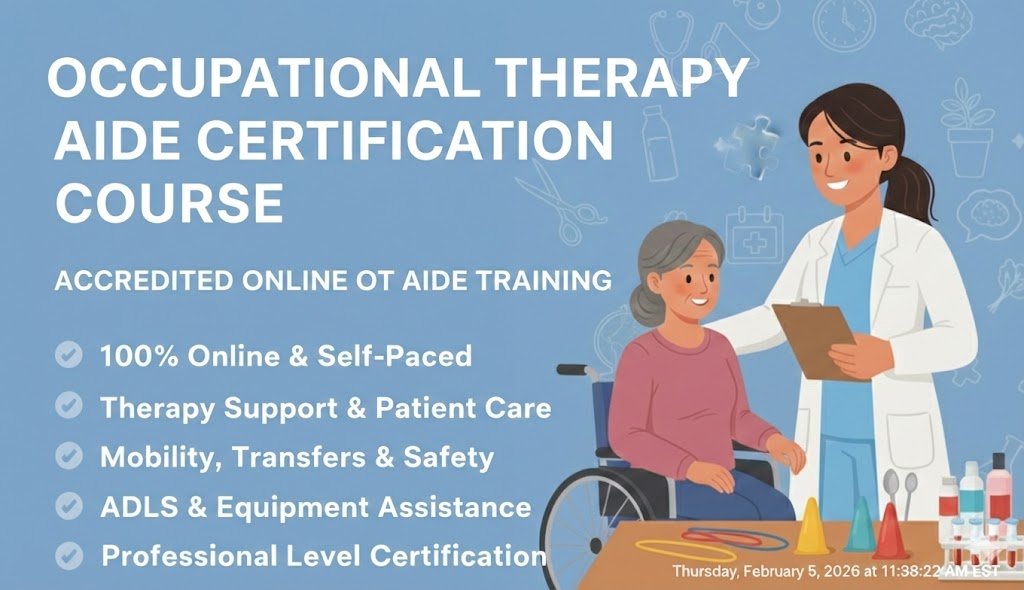
Occupational therapy is a healthcare profession focused on helping people participate as fully and independently as possible in the activities that give meaning and structure to their lives. These activities are known as occupations, and they include far more than employment. Occupations encompass everything a person needs or wants to do in daily life, such as getting dressed, bathing, cooking meals, managing a household, attending school, working a job, caring for others, engaging in hobbies, and participating in the community. Occupational therapy exists because illness, injury, disability, aging, or developmental challenges can disrupt a person’s ability to perform these everyday activities safely, effectively, or independently.
At its core, occupational therapy is about function. Rather than focusing only on a medical diagnosis, occupational therapy looks at how a condition affects a person’s real-world life. Two people may have the same diagnosis but very different functional challenges depending on their age, environment, roles, responsibilities, and personal goals. Occupational therapy addresses this by tailoring interventions to the individual, considering not just the body but also the environment, the task itself, and the person’s physical, cognitive, emotional, and social abilities. This whole-person, functional approach is what distinguishes occupational therapy from many other healthcare disciplines.
Occupational therapy services are designed to help individuals develop new skills, regain lost abilities, adapt tasks or environments, and build strategies that support independence and quality of life. In some cases, the goal is full independence. In other cases, the goal is maximizing safety, comfort, and participation with appropriate support. Occupational therapy does not assume that “normal” functioning looks the same for everyone. Instead, it focuses on helping each person reach their highest possible level of function within their unique circumstances.
Occupational therapy serves individuals across the entire lifespan. Services may begin in infancy and continue through old age. For infants and young children, occupational therapy often addresses developmental delays, sensory processing challenges, fine motor skills, feeding difficulties, and participation in play and early learning. For school-aged children, occupational therapy may support handwriting, classroom participation, attention, self-regulation, social interaction, and self-care skills. In adulthood, occupational therapy frequently focuses on work performance, daily living skills, recovery from injury or illness, management of chronic conditions, and adaptation to life changes. For older adults, occupational therapy often emphasizes fall prevention, cognitive support, safe mobility, independence in daily routines, and aging in place.
One of the defining features of occupational therapy is its focus on activities of daily living, commonly referred to as ADLs, and instrumental activities of daily living, known as IADLs. ADLs include basic self-care tasks such as bathing, grooming, dressing, toileting, eating, and functional mobility. IADLs include more complex activities that support independent living, such as cooking, cleaning, laundry, managing medications, handling finances, shopping, driving or using transportation, and managing communication. Occupational therapy addresses both ADLs and IADLs because both are essential to independence and quality of life.
Occupational therapy also addresses physical, cognitive, emotional, and sensory components of function. Physical components may include strength, range of motion, coordination, balance, endurance, and fine motor control. Cognitive components may include attention, memory, problem-solving, organization, safety awareness, and executive functioning. Emotional and psychosocial components may include motivation, coping skills, emotional regulation, self-esteem, and social interaction. Sensory components may involve how a person processes and responds to sensory input such as sound, light, touch, movement, or visual stimuli. Occupational therapy integrates all of these components rather than treating them in isolation.
The environments in which occupational therapy occurs are just as important as the skills being addressed. Occupational therapy recognizes that a person’s surroundings can either support or limit participation. For example, a home with stairs, narrow doorways, or poor lighting may create barriers for someone with mobility challenges. A classroom with excessive noise or visual clutter may overwhelm a child with sensory sensitivities. A workplace with poorly designed workstations may contribute to injury or reduced productivity. Occupational therapy addresses environmental factors by recommending adaptations, modifications, assistive devices, or alternative strategies to improve access, safety, and independence.
Occupational therapy services are delivered in a wide range of settings. These include hospitals, inpatient rehabilitation units, skilled nursing facilities, outpatient clinics, home health environments, schools, early intervention programs, mental health facilities, community centers, and workplaces. Each setting has unique goals, workflows, and patient populations, but the underlying purpose of occupational therapy remains consistent: enabling participation in meaningful life activities.
In medical settings such as hospitals and rehabilitation centers, occupational therapy often focuses on helping individuals recover functional skills after illness, injury, or surgery. This may include patients recovering from strokes, traumatic brain injuries, spinal cord injuries, fractures, joint replacements, or complex medical conditions. Occupational therapy in these settings often emphasizes self-care skills, upper extremity function, cognitive retraining, safety awareness, and preparation for discharge to home or another care environment.
In skilled nursing facilities and long-term care settings, occupational therapy frequently addresses functional decline associated with aging, chronic illness, or neurological conditions. Goals may include maintaining independence as long as possible, preventing further decline, reducing fall risk, managing dementia-related challenges, and improving quality of life. Occupational therapy in these environments often works closely with nursing staff, physical therapy, and caregivers to support consistent routines and safe daily care.
In outpatient and community-based settings, occupational therapy may focus on returning individuals to work, school, or community participation. This can include hand therapy, ergonomic assessments, work conditioning programs, cognitive rehabilitation, and management of chronic conditions. Occupational therapy may also support individuals adjusting to life changes such as disability, mental health challenges, or new caregiving roles.
In pediatric settings, occupational therapy frequently uses play-based approaches to support development. Play is considered a child’s primary occupation, and therapy activities are often designed to be engaging while addressing specific developmental goals. Occupational therapy may help children improve fine motor skills needed for writing, sensory processing needed for classroom participation, or self-care skills such as dressing and feeding. Family involvement is a critical component of pediatric occupational therapy, as caregivers play a key role in supporting progress outside of therapy sessions.
Occupational therapy also plays an important role in mental and behavioral health. In these contexts, therapy may focus on building routines, improving coping skills, enhancing social participation, developing life skills, and supporting emotional regulation. Occupational therapy recognizes that mental health challenges can significantly impact daily functioning and that participation in meaningful activities can be a powerful tool for recovery and stability.
Occupational therapy is inherently goal-oriented and client-centered. Goals are developed based on what is meaningful to the individual rather than solely on clinical measures. For one person, the goal may be returning to independent dressing. For another, it may be safely preparing meals or managing medications. For a child, it may be participating successfully in school activities. Occupational therapy professionals work collaboratively with clients to identify priorities and develop plans that align with personal values and life roles.
Within the occupational therapy profession, services are delivered by a team that typically includes occupational therapists (OTs), occupational therapy assistants (OTAs), and occupational therapy aides. Each role has distinct responsibilities, education requirements, and legal boundaries. Occupational therapists are responsible for evaluation, treatment planning, clinical decision-making, and overall management of care. Occupational therapy assistants work under the supervision of occupational therapists to implement treatment plans and contribute to ongoing assessment. Occupational therapy aides provide critical support that allows the therapy team to function efficiently and safely.
Understanding what occupational therapy is provides the foundation for understanding the role of the occupational therapy aide. OT aides do not provide skilled therapy interventions or make clinical decisions, but they play a vital role in supporting the delivery of services. By preparing environments, maintaining equipment, assisting with non-clinical tasks, observing patient responses, and supporting daily operations, OT aides contribute directly to the effectiveness of occupational therapy services. Their work helps ensure that therapists can focus on clinical care while patients receive services in a safe, organized, and supportive environment.
Occupational therapy is ultimately about enabling participation. Whether helping a child succeed in school, supporting an adult’s return to work, or assisting an older adult to remain independent at home, occupational therapy focuses on helping people live their lives as fully as possible. As an occupational therapy aide, understanding this purpose is essential. Every task performed, no matter how small it may seem, supports the larger goal of helping individuals engage in meaningful activities that define who they are and how they live.
This foundational understanding of occupational therapy and the populations it serves will guide all future learning in this course. As you progress, you will learn how your role as an OT aide fits within this broader mission, how to support therapy services safely and professionally, and how to contribute to positive outcomes for the individuals and communities served by occupational therapy.
 UKPRN 10092631