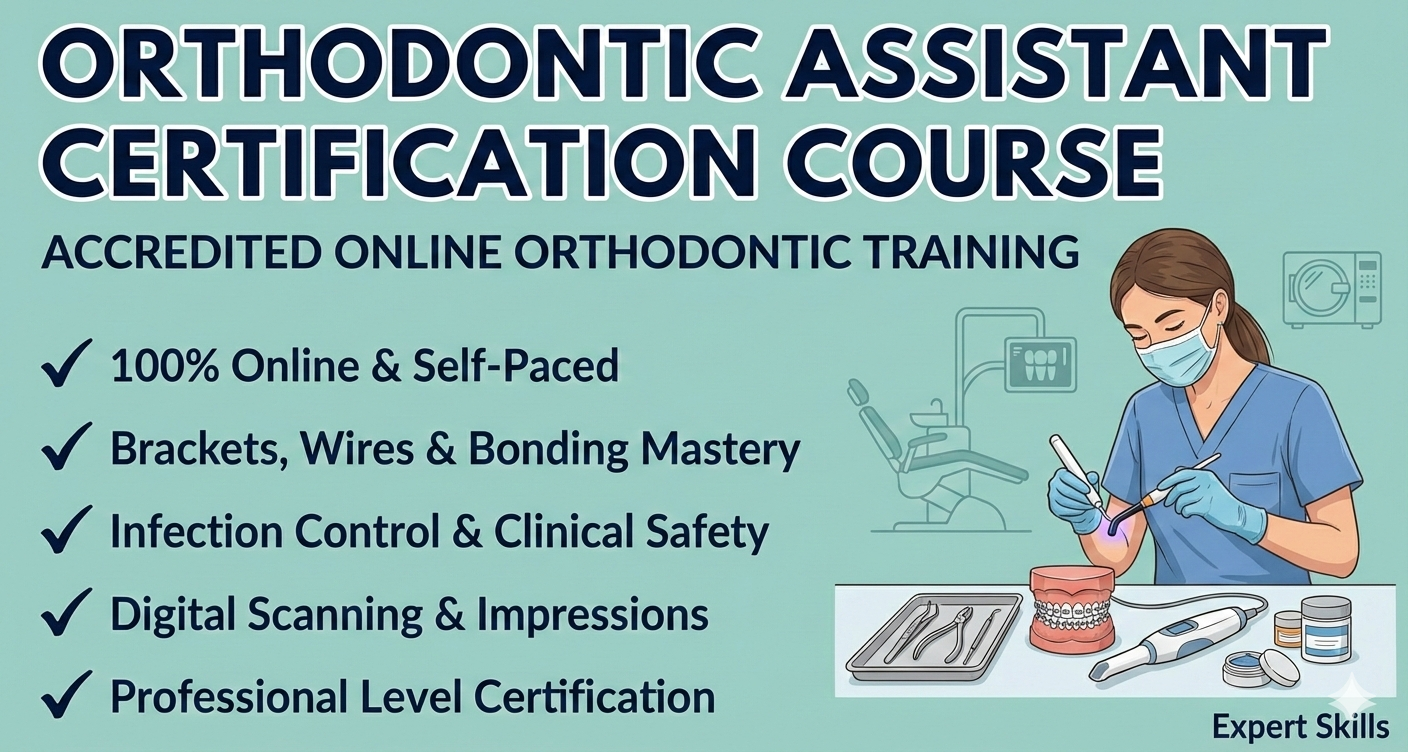
Orthodontic assisting is a specialized clinical support role that blends technical skill, patient communication, organization, and strict adherence to professional boundaries. While orthodontic assistants do not diagnose, prescribe treatment, or independently perform procedures outside their allowed scope, they are essential to the efficiency, safety, and quality of orthodontic care. This section provides a comprehensive, real-world explanation of what orthodontic assistants actually do each day, how their responsibilities fit into the clinical workflow, and how they collaborate with the broader orthodontic team to deliver consistent, high-quality patient care.
The Purpose of the Orthodontic Assistant Role
At its core, the orthodontic assistant’s purpose is to support the orthodontist and licensed clinical staff by preparing the clinical environment, assisting chairside during procedures, managing materials and instruments, guiding patients through visits, and maintaining accurate documentation—always within defined supervision and scope rules. Orthodontic treatment is long-term and detail-sensitive. Patients often visit dozens of times over months or years, and small errors can compound into significant problems. The assistant’s consistency, preparation, and attention to detail directly affect treatment outcomes, patient satisfaction, and clinic efficiency.
Orthodontic assistants serve as the connective tissue of the practice. They ensure that each appointment begins on time, flows smoothly, and ends with the patient informed, comfortable, and scheduled appropriately. They translate the orthodontist’s plan into an organized clinical experience, without stepping beyond their role boundaries.
A Day in the Life of an Orthodontic Assistant
Although no two practices are identical, most orthodontic assistants follow a predictable daily rhythm. Understanding this rhythm helps new assistants anticipate tasks, prioritize responsibilities, and avoid common mistakes.
Pre-Clinic Preparation
Before patients arrive, orthodontic assistants help prepare the clinical environment. This includes reviewing the day’s schedule, identifying appointment types (bonding, adjustments, debonding, records, retainer delivery), and ensuring that each operatory is stocked appropriately. Assistants verify that instruments are sterilized, trays are set correctly, materials are within expiration dates, and equipment is functional.
Preparation also involves mental readiness. Assistants review patient charts to note special considerations such as allergies, anxiety, compliance issues, broken appliances, or upcoming treatment milestones. This proactive review prevents surprises and allows the assistant to support the orthodontist effectively during the visit.
Patient Reception and Chairside Transition
When patients are called back from the waiting area, orthodontic assistants often guide them to the operatory, confirm their identity, and briefly explain what will happen during the visit. This sets expectations and reduces anxiety—especially important for pediatric and adolescent patients.
Assistants ensure patients are seated comfortably, place protective bibs or eyewear if required, and prepare isolation or retraction tools as needed. Even before the orthodontist enters the room, the assistant plays a critical role in creating a calm, professional environment.
Chairside Assistance During Procedures
Chairside assisting is one of the most visible aspects of the orthodontic assistant role. During bonding, adjustments, banding, or debonding appointments, assistants pass instruments, manage materials, control moisture, retract cheeks and lips, and support the orthodontist’s workflow.
Assistants must anticipate needs rather than react to them. This requires familiarity with procedures, instruments, and sequencing. For example, during a routine adjustment, an assistant should already have ligature cutters, replacement elastics, and the next archwire prepared before they are requested. Anticipation minimizes chair time and improves patient comfort.
Importantly, assistants must remain vigilant about scope boundaries. They support procedures but do not independently perform actions that require licensure or direct authorization beyond their role.
Patient Education and Reinforcement
Orthodontic assistants frequently reinforce instructions provided by the orthodontist. This may include demonstrating elastic placement, reviewing oral hygiene expectations, explaining dietary restrictions, or clarifying what sensations are normal after adjustments.
Education is not diagnosis. Assistants should avoid explaining treatment rationale beyond what has been approved by the orthodontist. Their role is to reinforce, not reinterpret. When patients ask questions outside the assistant’s scope, the appropriate response is to acknowledge the question and refer it to the orthodontist.
Post-Appointment Duties
After the orthodontist completes treatment, assistants help with final checks, remove isolation devices, ensure patient comfort, and escort the patient for scheduling or checkout. They also document materials used, note issues such as broken brackets or poor hygiene, and ensure the operatory is properly cleaned and reset.
This reset phase is critical. High-volume orthodontic practices depend on rapid, consistent room turnover without compromising infection control standards. Assistants who cut corners here create downstream risk for patients and staff.
Understanding Orthodontic Workflow
Orthodontic workflow is structured, repetitive, and appointment-type driven. Assistants must understand how different visit types alter responsibilities and preparation.
Common Orthodontic Appointment Types
Bonding appointments require extensive preparation, including bonding trays, adhesives, curing lights, and isolation tools. Adjustments require wire-related instruments, ligatures, and elastics. Debonding visits require removal tools, cleanup materials, and retention appliances.
Each appointment type follows a predictable sequence. Assistants who understand these sequences can prepare efficiently and reduce stress for both patients and clinicians.
Time Management and Flow Control
Orthodontic practices often schedule patients in short intervals. Delays in one room can ripple through the entire schedule. Orthodontic assistants help control time by staying organized, preparing early, and communicating clearly with the orthodontist and front desk.
When delays occur, assistants should inform the appropriate team members rather than attempting to rush procedures or skip steps. Accuracy and safety always outweigh speed.
Collaboration Within the Orthodontic Team
Orthodontic care is delivered by a coordinated team. Understanding how assistants collaborate with each role is essential for professional success.
Working With the Orthodontist
The orthodontist directs treatment planning, diagnoses conditions, and performs or authorizes clinical procedures. Assistants support this role by ensuring that the orthodontist can focus on decision-making rather than logistics.
Clear communication is essential. Assistants should report observations such as loose brackets, patient discomfort, or compliance issues objectively and concisely. Emotional language or assumptions should be avoided.
Collaborating With Other Assistants and Clinical Staff
In multi-chair practices, assistants often rotate rooms or support each other during peak times. Team consistency matters. Assistants must follow standardized tray setups, documentation methods, and infection control procedures to avoid confusion and errors.
Respectful teamwork includes offering help when appropriate, asking for clarification when unsure, and maintaining a professional tone—even during busy or stressful moments.
Communication With Front Desk and Administrative Staff
Orthodontic assistants frequently relay information to scheduling or billing staff. This may include noting missed appointments, appliance breakage, or follow-up needs. Accurate handoffs prevent miscommunication and improve patient experience.
Assistants should avoid discussing financial details or insurance unless specifically trained and authorized to do so. Their role is to support clinical communication, not administrative decision-making.
Professional Boundaries and Role Awareness
One of the most important competencies for orthodontic assistants is understanding what they do not do. Overstepping scope—whether intentionally or accidentally—creates legal risk and undermines patient safety.
Assistants must never present themselves as clinicians, provide diagnoses, alter treatment plans, or perform unauthorized procedures. When unsure, the correct response is always to ask or defer.
Professional confidence comes from mastery of assigned responsibilities, not from exceeding them.
The Orthodontic Assistant as a Patient Experience Ambassador
Patients often spend more time interacting with assistants than with the orthodontist. As a result, assistants significantly influence how patients perceive the practice.
Tone of voice, body language, patience, and clarity all matter. Adolescents may be resistant or anxious; adults may be concerned about aesthetics or discomfort. Assistants who listen, respond calmly, and maintain professionalism help build trust over the long course of treatment.
Key Skills That Define a Strong Orthodontic Assistant
Successful orthodontic assistants demonstrate consistency, attention to detail, adaptability, and teamwork. They think ahead, follow protocols, communicate clearly, and respect boundaries. These skills are developed through training, repetition, and a strong understanding of workflow—not through improvisation.
This section establishes the foundation for all future learning in the course. As you progress, you will see how each technical skill builds upon the daily responsibilities and collaborative mindset introduced here.
Module 1 Knowledge Check Quiz
1. What is the primary purpose of the orthodontic assistant role?
A. To diagnose orthodontic conditions
B. To independently perform orthodontic procedures
C. To support clinical workflow, patient care, and team efficiency within scope
D. To manage billing and insurance
2. Why is pre-clinic preparation important for orthodontic assistants?
A. It reduces the need for documentation
B. It prevents the orthodontist from needing to review charts
C. It supports efficient appointments and reduces errors
D. It replaces patient education
3. Which task is appropriate for an orthodontic assistant?
A. Adjusting treatment plans
B. Passing instruments and managing materials during procedures
C. Diagnosing malocclusions
D. Prescribing elastics independently
4. How should an orthodontic assistant respond to patient questions outside their scope?
A. Answer based on experience
B. Provide general advice
C. Defer the question to the orthodontist
D. Avoid answering entirely
5. What is one way orthodontic assistants help control clinic flow?
A. Shortening sterilization steps
B. Skipping documentation when busy
C. Preparing trays and materials in advance
D. Rushing procedures
6. Why is consistency among assistants important in a multi-chair practice?
A. It reduces the need for supervision
B. It prevents confusion and errors
C. It allows assistants to work independently
D. It eliminates the need for protocols
7. Which behavior best reflects professional boundaries?
A. Explaining treatment rationale in detail
B. Making minor treatment adjustments when the orthodontist is busy
C. Supporting procedures while deferring decisions to licensed staff
D. Offering personal opinions about treatment outcomes
Answer Key
C
C
B
C
C
B
C
 UKPRN 10092631