Section 1: Systems of the Body
The Muscular System
Physical activity is the result of the collaborative and synchronized functioning of the skeletal, muscular, and nervous systems. The nervous system is accountable for initiating and altering muscle activation. Movement is created by the muscles as they generate forces that rotate bones around joints. This section examines the fundamental structure and operation of these systems in the context of personal training.
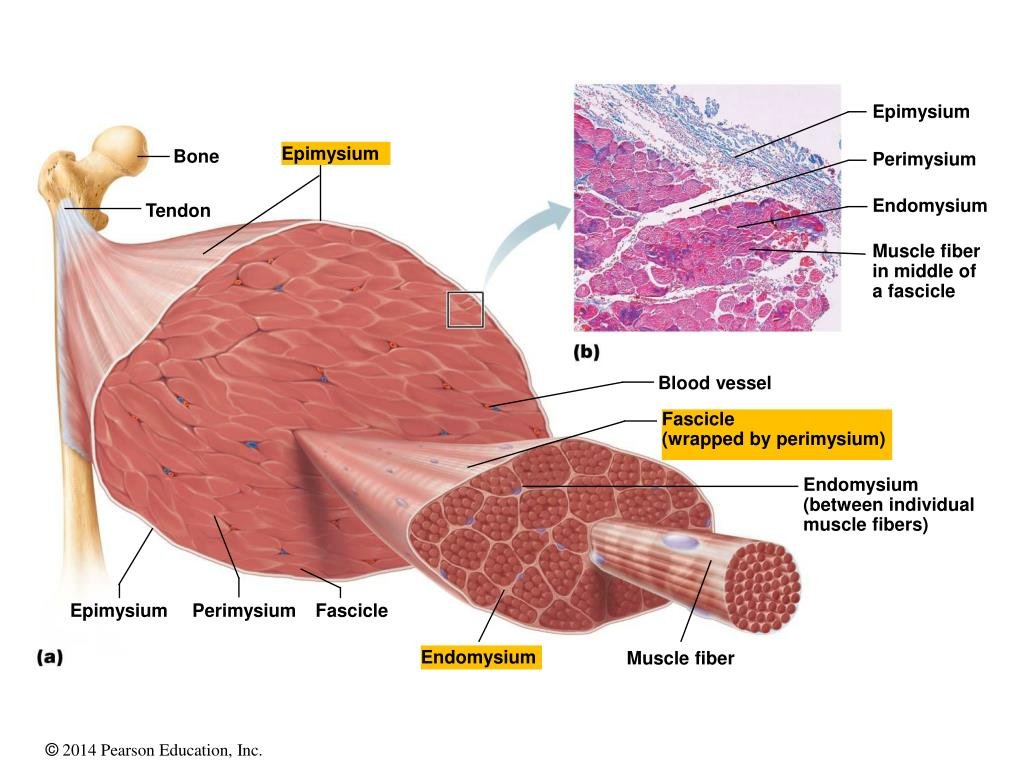
When muscles are activated, they generate force through a process called muscle contraction or action. The type of muscle determines its function; among the three types of muscles (smooth, cardiac, and skeletal), it is the skeletal muscles that attach to bones and enable them to rotate around joints, allowing for activities such as running, jumping, lifting, and throwing. The gross anatomy of skeletal muscle can be described without the use of figures. Each skeletal muscle is surrounded by a layer of connective tissue known as epimysium and divided into bundles of muscle fibers, called fascicles, which are further surrounded by perimysium. Within each fascicle, muscle fibers are separated by endomysium. These connective tissues work together to transmit the force of muscle action to the bone via a tendon.
The structure of skeletal muscle includes three layers of connective tissue that surround the whole muscle, fasciculus, and individual muscle fibers. These layers are known as epimysium, perimysium, and endomysium, respectively.
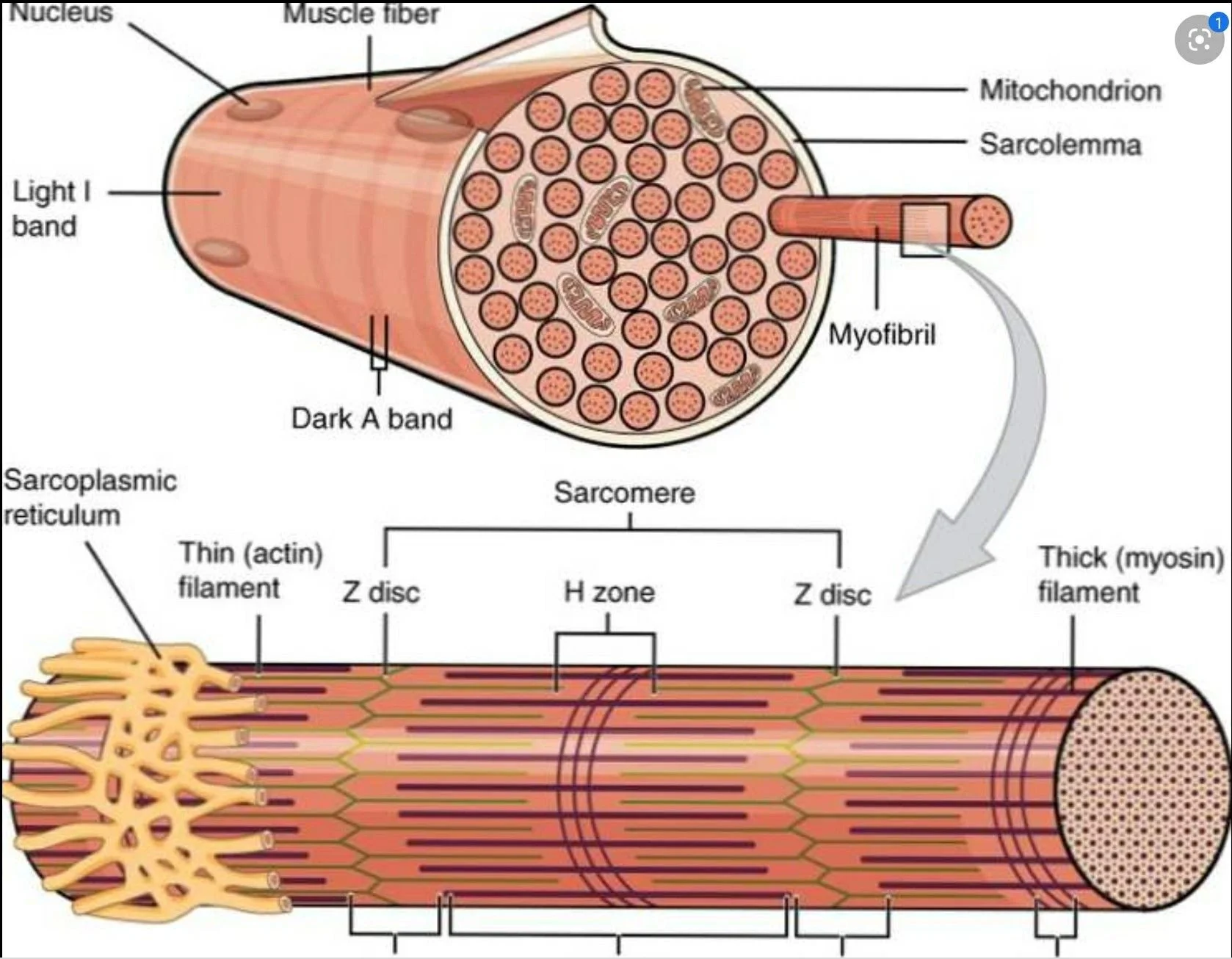
Skeletal muscle fibers are individual cells with various structural components similar to other cells. The cell is enclosed by the sarcolemma, a plasma membrane that regulates the movement of materials such as glucose and conducts stimuli as electrical impulses. Skeletal muscle fibers are multinucleated, having many nuclei responsible for initiating processes associated with exercise adaptations. The cytoplasm or sarcoplasm contains the energy sources, including ATP, phosphocreatine, glycogen, and fat droplets. It also has organelles such as mitochondria, which produces aerobic ATP essential for aerobic exercise performance. Additionally, sarcoplasmic reticulum, another organelle, stores calcium and regulates the muscle action process by altering the calcium concentration. The T-tubules, channels formed by openings in the sarcolemma, transmit action potentials from the cell's interior to the sarcoplasmic reticulum.
Myofibrils
Each muscle fiber contains myofibrils, which are protein structures running parallel to the length of the fiber, consisting primarily of myosin (thick) and actin (thin) filaments arranged in a regular pattern, giving a striated appearance. Myosin filaments are made up of myosin molecules with a head, neck, and tail, with the head capable of attaching to and pulling on the actin filament with energy from ATP hydrolysis. Each actin filament is made up of globular G-actin proteins that assemble into filamentous F-actin strands with binding sites for myosin heads. Tropomyosin and troponin are regulatory proteins associated with the actin filament, with tropomyosin spanning seven G-actin proteins and lying over the myosin binding sites on actin when the muscle cell is at rest. Troponin, when bound to calcium, moves tropomyosin away from the myosin binding sites, allowing myosin heads to attach and pull on actin for muscle activation. Nebulin ensures the correct length of the actin filaments.
Sarcomeres
The sarcomere is the fundamental unit of muscle contraction. It stretches from one Z-line to the adjacent Z-line, and the width of a myosin filament determines the A-band, which gives the dark striation of skeletal muscle. Actin filaments are anchored at one end to the Z-line, extending inward to the center of the sarcomere. The H-zone is the area of the A-band that contains myosin but not actin. In the middle of the H-zone, the M-line aligns adjacent myosin filaments. The I-band spans the distance between the ends of adjacent myosin filaments and lies partly in each of two sarcomeres. I-bands are less dense than A-bands, giving skeletal muscle its light striation.
Sliding Filament Theory
The sliding filament theory is the most widely accepted theory of muscle action. It states that muscle fibers shorten or lengthen when the filaments (actin and myosin) slide past each other without changing in length. Here are the steps that occur during muscle action:
1. An action potential travels along a neuron to the neuromuscular junction, leading to the release of acetylcholine (ACh) into the synaptic cleft.
2. ACh binds with ACh receptors on the motor endplate of the muscle fiber.
3. This generates an action potential along the sarcolemma of the muscle fiber and travels via T-tubules to trigger the release of calcium from the sarcoplasmic reticulum.
4. Calcium binds with troponin molecules located along the actin filaments.
5. This binding causes a conformational change in troponin that moves tropomyosin, exposing binding sites on actin to the myosin head.
6. The myosin head attaches to actin, forming a cross-bridge, and pulls the actin filament toward the center of the sarcomere. The success of this depends on the amount of force generated by the cross-bridges and external forces opposing them.
7. The myosin head detaches from actin and re-energizes by binding with a fresh ATP molecule. This process continues as long as the muscle fiber is being stimulated to contract by its motor neuron.
Muscle Action Types
The types of muscle actions are important to understand when considering the resistance training. When muscles are stimulated, they try to shorten by pulling the actin toward the center of the sarcomere. However, during resistance training, the muscle is usually contracting against some external resistance, which may act in opposition to the muscle force. If the muscle force is greater than the external resistance, a concentric muscle action occurs, causing the muscle to shorten. If the muscle force is less than the external resistance, the muscle will lengthen even as it tries to shorten, known as an eccentric muscle action. If the muscle force is equal and opposite to that of the external resistance, an isometric muscle action occurs, and the muscle remains the same length. In resistance training, the concentric phase is often perceived as more difficult than the eccentric phase, but both phases are important for maximizing the benefits of training.
Delayed Onset Muscle Soreness
Delayed-Onset Muscle Soreness (DOMS) is a common experience of muscular pain and discomfort that may occur 24 to 48 hours after starting a new exercise program or performing unfamiliar exercises. Earlier beliefs suggested that this was due to lactic acid buildup, but recent research indicates that it is likely caused by a combination of connective and muscle tissue damage, followed by an inflammatory reaction that activates pain receptors. This damage is primarily caused by eccentric muscle actions, which result in micro-tears in connective and muscle tissues. The pain that results can last for days and can reduce range of motion, strength, and the ability to produce force quickly. Nutritional supplements, massage, ice, and ultrasound are some strategies used to reduce the pain and performance decrements associated with DOMS. However, exercise itself appears to be the most effective means of reducing the pain associated with DOMS, although its analgesic effects are temporary.
Muscle Fiber Types
Muscle fibers differ in their performance and physiological characteristics, which has led to the concept of muscle fiber typing. Muscle fibers can be classified into types based on different characteristics, such as their preference for aerobic versus anaerobic metabolism, oxidative capacity, myosin ATPase form, maximal shortening velocity, maximal force production, and fiber efficiency. To determine muscle fiber type, a muscle biopsy must be performed. The biochemical and contractile properties of the muscle fibers are of practical significance to personal trainers.
Muscle fibers can be classified into slow fibers (type I, slow oxidative or slow-twitch fibers) and fast fibers (type IIa, fast oxidative glycolytic or type IIx, fast glycolytic fibers). Slow fibers have high oxidative capacity, are fatigue-resistant, but contract and relax slowly. Fast fibers are large and powerful, with moderate to high anaerobic metabolic capability. FOG fibers have moderate oxidative and anaerobic capacity, providing them with some fatigue resistance in comparison to the purely anaerobic and highly fatigable FG fibers.
It is important to note that the characteristics by which fibers are categorized into types lie on a continuum rather than being discrete categories. Muscle fibers will adapt based on the physiological stress placed on them, such as regular resistance training, which will cause both type I and type II fibers to increase in size.
The Nervous System
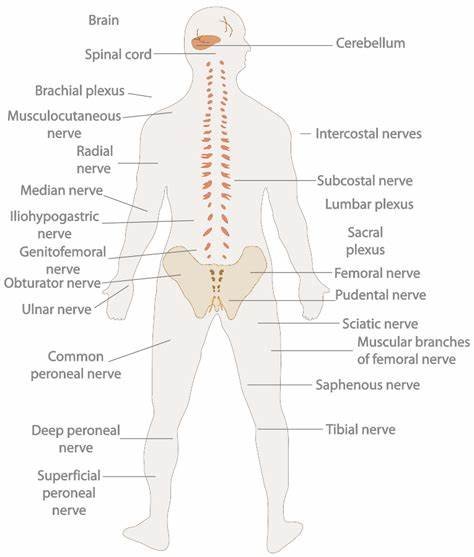
The nervous system is responsible for directing and controlling voluntary movement, while skeletal muscles produce the force for movement and exercise. The nervous system can be divided anatomically into the central nervous system, consisting of the brain and spinal cord, and the peripheral nervous system, which lies outside the central nervous system and relays nerve impulses to and from the periphery. The nervous system has somatic (voluntary) and autonomic (involuntary) functions. The somatic nervous system activates skeletal muscles, while the autonomic nervous system controls involuntary functions such as heart contraction and smooth muscle activity in blood vessels and glands.
The most basic unit of the nervous system is the neuron. Motor neurons, also known as efferent neurons, conduct impulses from the central nervous system to the muscles and cause skeletal muscles to contract. Sensory neurons, also called afferent neurons, carry impulses from the periphery to the central nervous system regarding information such as tension, stretch, movement, and pain. The site of communication between neurons or a neuron and a gland or muscle cell is known as a synapse. The structure of a typical motor neuron includes dendrites, a cell body, and an axon that innervates a muscle. When a motor neuron activates skeletal muscle, it causes the release of ACh at the neuromuscular junction, leading to muscle action.
In addition to motor neurons, there are various sensory neurons that convey information from the periphery, such as from the muscles and joints, back to the central nervous system. Two sensory structures that have particular significance to exercise training are the muscle spindle and the Golgi tendon organ (GTO).
Muscle Spindle and Golgi Tendon
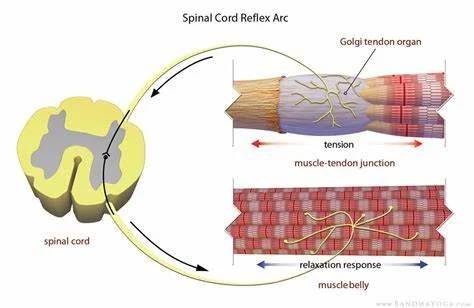
The muscle spindle is a sensory receptor that is dispersed throughout most skeletal muscles. It is a stretch receptor that senses changes in muscle length, especially when the muscle changes length quickly. The muscle spindle is a spindle-shaped sensory organ that lies parallel to the extrafusal fibers in a capsule. It contains specialized muscle fibers called intrafusal fibers that have contractile proteins at each end and a central region wrapped by sensory nerve endings. When a stretching force is applied to the muscle, it stretches both intrafusal and extrafusal muscle fibers, causing a sensory discharge from the muscle spindle that is carried toward the spinal cord, leading to a motor response, activation of the muscle that was initially stretched, known as the myotatic or stretch reflex. Static stretching exercises are typically done slowly to avoid activation of the muscle spindles. However, activation of the muscle spindle is desired during plyometric exercises, where a muscle is rapidly stretched, followed immediately by a concentric action of the same muscle, leading to a more powerful concentric action.
The Golgi tendon organ is a sensory receptor located at the junction of the muscle and tendon. Its main function is to protect the muscle from injury. When the muscle is activated, the Golgi tendon organ is deformed, and if the muscle action is too strong, it will cause the sensory information to be sent to the spinal cord. This, in turn, leads to relaxation of the acting muscle and stimulation of the antagonist muscle. This reflexive action protects the muscle and joint from injury caused by excessive force of muscle action.
The Motor Unit
The motor unit is composed of a motor neuron and the muscle fibers it innervates. All fibers within a motor unit have the same fiber type and metabolic and contractile characteristics determined by the motor neuron. The number of fibers innervated by a motor unit can vary, with small muscles having relatively few fibers per unit and larger muscles having a large number of fibers per unit.
The nervous system can vary the force produced by a muscle over a wide range of intensities through two mechanisms: motor unit recruitment and rate coding. Motor unit recruitment involves varying the number of motor units, and thus muscle fibers, that are activated. Rate coding involves increasing the firing rate of motor units already activated. When lifting a light weight, only a small number of motor units are activated, but as the resistance increases, more motor units are recruited to the active pool of motor units, leading to an increase in force due to the increased number of muscle fibers contracting.
There is a specific order in which motor units are recruited, known as the size principle of motor unit recruitment. The smaller type I motor units are recruited first, followed by the larger type IIa motor units and then the type IIx motor units. Most people are unable to activate all their motor units but can recruit more motor units with training.
Increasing muscle force production can also be achieved by increasing the firing rate of already activated motor units. Evidence suggests that well-trained weightlifters, including older adults, have higher maximal motor unit discharge rates than untrained individuals.
The Skeletal System
Movement and exercise are made possible due to the connection between skeletal muscles and bones through joints. When muscles pull on bones, they rotate, which allows us to perform various physical activities, such as lifting weights or running on a treadmill. In addition to serving as bony levers, the skeletal system performs other important physiological functions, such as mineral storage, blood cell formation, and organ protection. The skeletal system consists of 206 bones, which can be classified into the axial skeleton (skull, vertebral column, sternum, and ribs) and the appendicular skeleton (bones of the upper and lower limbs). These bones protect internal organs and provide sites for muscle attachments. Movements associated with exercise, such as lifting, running, throwing, kicking, and striking, are made possible by the rotations of the bones around joints.
Bone is a constantly changing tissue that undergoes a process called remodeling. Osteoclasts break down bone while osteoblasts stimulate bone synthesis. There are two types of bone: cortical and cancellous. Cortical bone is hard and dense and is found in the outer layers of long bones. Cancellous bone is less dense and is found in the interior area of long bones, the vertebrae, and the head of the femur. Calcium and phosphorus are important minerals for bone formation. Osteoporosis is a condition in which bones become weak and brittle, making them more susceptible to breaking, especially in the spine and hip. Along with proper nutrition, exercise is crucial for bone health. Weight-bearing exercises like running increase bone mineral density, and resistance training is effective at increasing bone mineral density, especially eccentric loading. Personal trainers should include weight-bearing exercises and eccentric loading in resistance training programs for clients.
The skeletal system is associated with two other types of connective tissues, namely tendons and ligaments. Tendons attach muscles to bones and can handle tensile forces generated by muscle contraction due to their primary component, collagen. Ligaments connect bones to other bones, and they also contain elastin, which gives them some ability to stretch, balancing joint stability with mobility. During exercise, the nervous system activates muscles that pull on bones and these connective tissues. To design safe and effective exercise programs, personal trainers need to understand the structure and function of tendons and ligaments and how they work during physical activity. This knowledge also forms the basis for understanding how repeated bouts of various types of exercise cause specific adaptations.
Cardiorespiratory System
The cardiovascular and respiratory systems collaborate to supply the body with oxygen and nutrients during exercise, as well as to eliminate metabolic waste products from the muscles.
To understand the cardiovascular system and gas exchange, it is necessary to discuss the characteristics of blood first. Blood plays a critical role in transporting oxygen, nutrients, and metabolic by-products throughout the body. It consists of three components: plasma, leukocytes and platelets, and erythrocytes. Erythrocytes are the most abundant, accounting for around 45% of whole blood, while leukocytes and platelets make up less than 1%, and plasma makes up approximately 55% (refer to figure 2.1). The normal pH range of arterial blood is roughly 7.4, and deviations from this value can occur due to various factors such as exercise, stress, or illness. However, it is important to note that the physiological tolerance for changes in arterial blood pH and muscle pH is between 6.9 and 7.5 and 6.63 and 7.10, respectively. To regulate the pH, buffers such as bicarbonate, ventilation, and kidney function come into play.
Oxygen
The body transports oxygen through the blood via two methods: dissolved in the blood and carried by hemoglobin. However, since only a small amount of oxygen (around 2%) is dissolved in the blood, the focus will be on hemoglobin. Hemoglobin is a protein in red blood cells that contains iron and can bind between one and four oxygen molecules. Each gram of hemoglobin can carry about 1.39 ml of oxygen, and healthy blood has about 15 g of hemoglobin per 100 ml. Therefore, healthy blood can carry around 20.8 ml of oxygen per 100 ml of blood. The average healthy adult who is not anemic has around 5.0 L of blood volume, which accounts for about 7% of their body weight.
After learning about how oxygen is carried in the blood, it is important to discuss the oxygen-hemoglobin dissociation curve. This curve shows the saturation of hemoglobin at various partial pressures, which is the pressure exerted by one gas in a mixture of gases. The relationship between partial pressure of oxygen and oxygen saturation is sigmoidal, meaning that as oxygen binds to hemoglobin, it facilitates subsequent binding of oxygen molecules due to cooperative binding. As the oxygen partial pressure increases, hemoglobin becomes saturated, but this saturation begins to plateau at around 60 mmHg with approximately 90% of hemoglobin saturated with oxygen. The subsequent increase from 60 mmHg to 100 mmHg results in an increase to 98% of hemoglobin saturated with oxygen.
The oxygen-hemoglobin curve can be influenced by various factors, shifting the curve to the right or left. For instance, a decrease in core body temperature shifts the curve towards the left, whereas an increase in temperature shifts it towards the right. Arterial blood acidity can also cause a leftward or rightward shift in the curve, with blood with low pH shifting the curve right and blood with high pH shifting the curve left. In practical settings, exercise can increase core body temperature and shift the curve towards the right, allowing oxygen to be released at a higher partial pressure to be used by working muscles instead of staying bound to hemoglobin.
Heart Composition
The heart is a muscular organ composed of cardiac muscle that contains four chambers: the right atrium, left atrium, right ventricle, and left ventricle. Unlike skeletal muscle, cardiac muscle is mononucleated and under involuntary neural control. The heart has its own internal pacemaker, the sinoatrial (SA) node, which generates an electrical impulse that spreads across the atrium to the atrioventricular (AV) node. From there, the impulse continues to spread down through the left and right bundle branches into the Purkinje system, a series of fibers that surround the ventricles, resulting in ventricular contraction. The entire process of impulse generation to ventricular contraction takes approximately 0.2 seconds.
Deoxygenated blood returns to the right atrium via the superior and inferior vena cava and is delivered to the right ventricle. The pulmonary artery delivers the deoxygenated blood to the lungs for gas exchange, where it is loaded with oxygen and metabolic by-products are removed. The oxygenated blood returns to the left atrium via the pulmonary vein and is delivered to the left ventricle. The oxygen-rich blood is then pumped throughout the body via the aorta and delivered to organs and tissues through miles of vasculature.
Circulation System
The circulation system is made up of arteries, which transport blood from the heart to tissues and organs, and veins, which transport blood from the tissues and organs back to the heart. The exception to this is the pulmonary veins, which carry oxygenated blood from the lungs to the heart. Arteries are typically high-pressure systems, with the aorta having a pressure of around 100 mmHg and arterioles having a pressure of approximately 60 mmHg. In contrast, veins have very low pressure relative to arteries, which is why they have one-way valves and smooth muscle bands to help move venous blood back to the heart, particularly when muscles are contracted during movement.
The total peripheral resistance is the resistance of the entire systemic circulation. The resistance increases with the constriction of blood vessels and decreases with dilation. However, many factors can influence the constriction or dilation of vessels, including exercise type, sympathetic nervous system stimulation, local muscle tissue metabolism, and environmental stressors such as heat or cold. During exercise, for example, the sympathetic nervous system stimulates arterial vasodilation, which increases blood flow to the working muscles, while blood is redistributed from other organs to the muscles used for that particular exercise.
The cardiac cycle refers to the events that occur from the start of one heartbeat to the start of another heartbeat. The cycle is composed of periods of relaxation (diastole) and contraction (systole). During diastole, the heart fills with blood. Systolic blood pressure (SBP) refers to the pressure exerted against arterial walls when blood is forcefully ejected during ventricular contraction (systole). Measuring SBP and heart rate (HR) simultaneously is useful in describing the work of the heart and can provide an indirect estimation of myocardial oxygen uptake. The rate-pressure product (RPP) or double product, which estimates the work of the heart, is calculated using the equation RPP = SBP x HR.
On the other hand, diastolic blood pressure (DBP) refers to the pressure exerted against arterial walls when no blood is being forcefully ejected through the vessels during diastole. DBP provides an indication of peripheral resistance or vascular stiffness and tends to decrease with vasodilation and increase with vasoconstriction. Additionally, mean arterial pressure (MAP) is the average blood pressure throughout the cardiac cycle and is typically estimated using the equation MAP = DBP + [0.333 x (SBP-DBP)].
Electrocardiogram
To record the heart's electrical activity, electrodes are placed on the chest. The impulses generated by the heart are detected and presented as an electrocardiogram (ECG) with three components: P-wave (atrial depolarization), QRS complex (ventricular depolarization), and T-wave (ventricular repolarization). Atrial repolarization occurs during the QRS complex and is not visible. ECGs are commonly used during exercise tests to evaluate heart function under stress.
Cardiac Output
Cardiac output is the volume of blood that the heart pumps in one minute. It is calculated using the stroke volume (SV), which is the amount of blood ejected by the heart in one beat, and heart rate (HR). Stroke volume is calculated using the difference between the end-diastolic volume (EDV) and end-systolic volume (ESV). EDV is the amount of blood in the ventricles after filling, while ESV is the amount of blood in the ventricles after contraction. Thus, the formula for cardiac output is Q = SV x HR. The Frank-Starling principle states that the more the left ventricle is stretched, the more forceful the contraction and the greater the volume of blood leaving the ventricle. The increase in preload (EDV) is directly related to the volume of blood returning to the heart.
The Respiratory System
The respiratory system is responsible for exchanging oxygen and carbon dioxide. It includes the lungs, trachea, bronchi, bronchioles, and alveoli. Air passes through the nose where it is warmed, humidified, and purified before being distributed to the lungs. The diaphragm and external intercostal muscles aid in inspiration by expanding the thorax and lowering air pressure in the lungs, allowing air to enter. Expiration at rest is a passive response, but during exercise, internal intercostal and abdominal muscles aid in moving air in and out of the lungs. Spirometry measures lung volumes, while gas exchange occurs at the alveoli where oxygen diffuses into the blood and carbon dioxide diffuses out of the blood. The partial pressures of oxygen and carbon dioxide change at different stages of gas exchange, creating pressure gradients that allow for diffusion. This cycle of gas exchange repeats continuously.
Oxygen uptake, also known as oxygen consumption, refers to the amount of oxygen used by the body's tissues. It is primarily related to the ability of the heart and circulatory system to transport oxygen via blood to the tissues and the ability of the tissues to extract oxygen. Oxygen uptake is typically measured at the mouth using a metabolic cart. The formula that represents oxygen uptake is the Fick equation, which is the product of cardiac output and a–v- O2 difference. The a–v- O2 difference is the arterial oxygen content minus the venous oxygen content in milliliters of O2 per 100 ml of blood. The maximal oxygen uptake (V.O2max) is the highest amount of oxygen that can be used at the cellular level for the entire body and is recognized as the most accepted measure of cardiorespiratory fitness. Resting V.O2 is typically estimated at 3.5 ml · kg−1 · min−1, whereas V.O2max has been reported close to 80 ml · kg−1 · min−1 in elite endurance athletes. Knowledge of the cardiovascular and respiratory systems facilitates understanding of gas exchange at rest and during exercise.
We recommend also taking a look at these videos to get a more in-depth look at Anatomy and Physiology for PT.
https://www.youtube.com/watch?v=yr2-rMt0gAg
https://www.youtube.com/watch?v=Iu8vkjbhNw0
https://www.youtube.com/watch?v=GbWCXZ-xfOM
 UKPRN 10092631