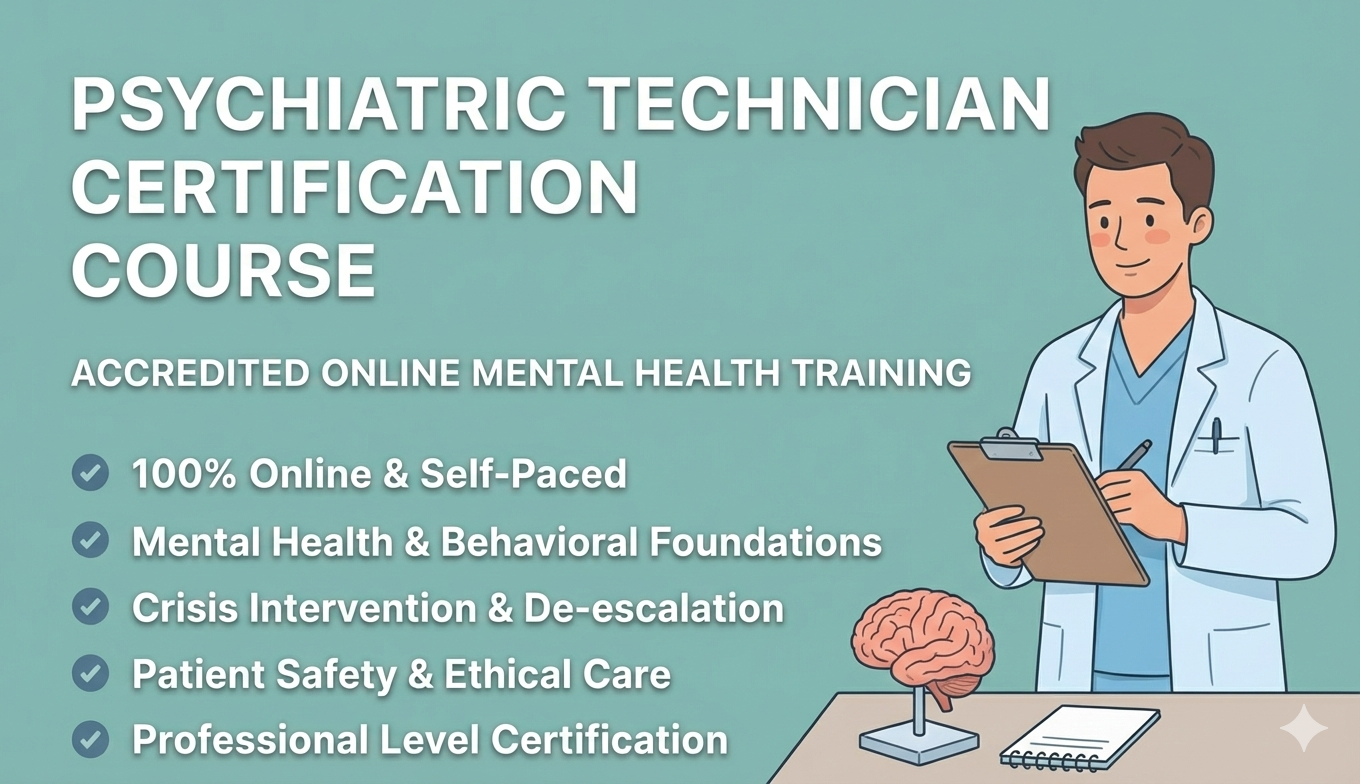
Psychiatric care is a specialized area of healthcare focused on the assessment, stabilization, treatment, and ongoing support of individuals experiencing mental health conditions, emotional distress, behavioral disorders, or psychiatric crises. Unlike general medical care, which often prioritizes physical symptoms and measurable biological outcomes, psychiatric care centers on thoughts, emotions, behaviors, perceptions, and the way these internal experiences affect a person’s ability to function safely and independently. For a psychiatric technician, understanding what psychiatric care truly is—and what it is not—is the foundation of safe, ethical, and effective practice.
At its core, psychiatric care exists to protect safety, reduce suffering, restore functional ability, and support long-term recovery. This includes preventing harm to the patient or others, stabilizing acute symptoms, supporting medication and therapy plans, and helping patients regain skills needed for daily living. Psychiatric care is not about control or punishment; it is about structured support, consistency, and therapeutic engagement. Psychiatric technicians play a key role in maintaining this structure through observation, communication, routine support, and moment-to-moment decision-making within their scope of practice.
Psychiatric care takes place across a wide range of settings, each designed to meet different levels of patient need. These settings differ in intensity, length of stay, patient autonomy, staffing patterns, and safety protocols. A skilled psychiatric technician must understand how these environments function, how goals differ between them, and how their role adapts depending on the level of care.
One of the most common settings for psychiatric care is the inpatient psychiatric unit. Inpatient care is designed for individuals who are experiencing acute symptoms that cannot be safely managed in the community. This may include suicidal ideation, severe depression, psychosis, mania, extreme agitation, or behaviors that pose immediate risk. Inpatient units are highly structured environments with locked doors, controlled movement, scheduled routines, and continuous staff presence. The primary goal of inpatient psychiatric care is stabilization. This means reducing immediate risk, initiating or adjusting treatment, and preparing the patient for a lower level of care once they are safe.
Within inpatient settings, psychiatric technicians are constantly engaged in direct patient interaction. They monitor behavior, perform safety checks, assist with daily activities, support therapeutic routines, and serve as the “eyes and ears” of the clinical team. Because inpatient care focuses on short-term stabilization rather than long-term therapy, technicians must understand that progress is often measured in small but critical steps, such as improved sleep, reduced agitation, or increased cooperation with treatment.
Another important psychiatric care setting is residential treatment. Residential programs provide longer-term, structured care for individuals who need more support than outpatient services but do not require constant medical supervision. These settings may serve adolescents, adults, or specialized populations such as individuals with substance use disorders or trauma histories. Residential care focuses on skill-building, emotional regulation, and behavioral change over weeks or months rather than days.
In residential settings, psychiatric technicians often take on a more routine-oriented and coaching-focused role. Patients may have more freedom of movement, participate in daily programming, and engage in group activities. The technician’s responsibility shifts toward maintaining structure, reinforcing expectations, modeling appropriate behavior, and identifying subtle changes that may indicate relapse, escalation, or emotional distress. Understanding the long-term goals of residential care helps technicians avoid reacting to behavior as isolated incidents and instead view them as part of a broader treatment process.
Partial hospitalization programs (PHPs) and intensive outpatient programs (IOPs) represent intermediate levels of psychiatric care. These programs allow patients to live at home while attending structured treatment for several hours per day, multiple days per week. PHPs are more intensive than IOPs and are often used as a step-down from inpatient care or as a way to prevent hospitalization. The goals in these settings include continued symptom management, relapse prevention, and skill reinforcement while gradually increasing patient independence.
Psychiatric technicians working in these settings must understand that patients are balancing treatment with real-world stressors such as family, work, and housing. Behavior may fluctuate more than in inpatient settings, and technicians must be skilled at recognizing early warning signs while respecting patient autonomy. Communication with the broader treatment team becomes especially important, as technicians often observe changes that occur during group activities or informal interactions.
Outpatient psychiatric care is the least restrictive level of care and includes therapy offices, community mental health clinics, and medication management appointments. While psychiatric technicians are less commonly employed in traditional outpatient settings, some clinics and community programs use technicians to support patient flow, assist with group activities, or provide monitoring for higher-risk individuals. The primary goal of outpatient care is maintenance and long-term management of mental health conditions.
Understanding outpatient care is important even for technicians who work exclusively in inpatient settings, because discharge planning and continuity of care depend on successful transition to outpatient services. Psychiatric technicians often help patients prepare for this transition by reinforcing routines, encouraging adherence to treatment plans, and modeling appropriate coping strategies.
Across all psychiatric settings, levels of care are determined by risk, symptom severity, functional ability, and available support systems. Levels of care are not judgments about a person’s character or effort; they are clinical decisions based on safety and need. A patient may move between levels multiple times throughout their life, and this movement is a normal part of recovery for many individuals with mental health conditions.
One of the most important concepts for psychiatric technicians to understand is that psychiatric care is dynamic rather than static. A patient’s level of care can change rapidly based on behavior, mood, medical status, or external stressors. This is why observation and communication are central to the technician role. Noticing changes early and reporting them accurately can prevent crises and reduce the need for more restrictive interventions.
The goals of psychiatric care extend beyond symptom reduction. While reducing hallucinations, stabilizing mood, or decreasing anxiety are critical objectives, psychiatric care also aims to preserve dignity, autonomy, and hope. Patients are not defined by their diagnoses or behaviors, even during severe episodes. Psychiatric technicians must balance safety with respect, structure with empathy, and consistency with individualized support.
Psychiatric care also emphasizes recovery-oriented principles. Recovery does not necessarily mean the complete absence of symptoms; it means helping individuals live meaningful lives while managing their conditions. This perspective shapes how staff communicate with patients, respond to setbacks, and frame expectations. For technicians, this means avoiding language that labels patients as “difficult” or “noncompliant” and instead focusing on observable behaviors and support needs.
Finally, psychiatric care operates within legal, ethical, and professional frameworks that protect both patients and staff. Understanding the settings, goals, and levels of care provides the context for these frameworks. A technician who understands why a unit operates the way it does is better equipped to follow procedures, respond calmly under pressure, and make sound decisions within scope.
By the end of this section, students should understand that psychiatric care is a structured, goal-driven system designed to meet patients where they are, provide the appropriate level of support, and guide them toward stability and recovery. This understanding forms the foundation for every skill, interaction, and responsibility that follows in the psychiatric technician role.
 UKPRN 10092631