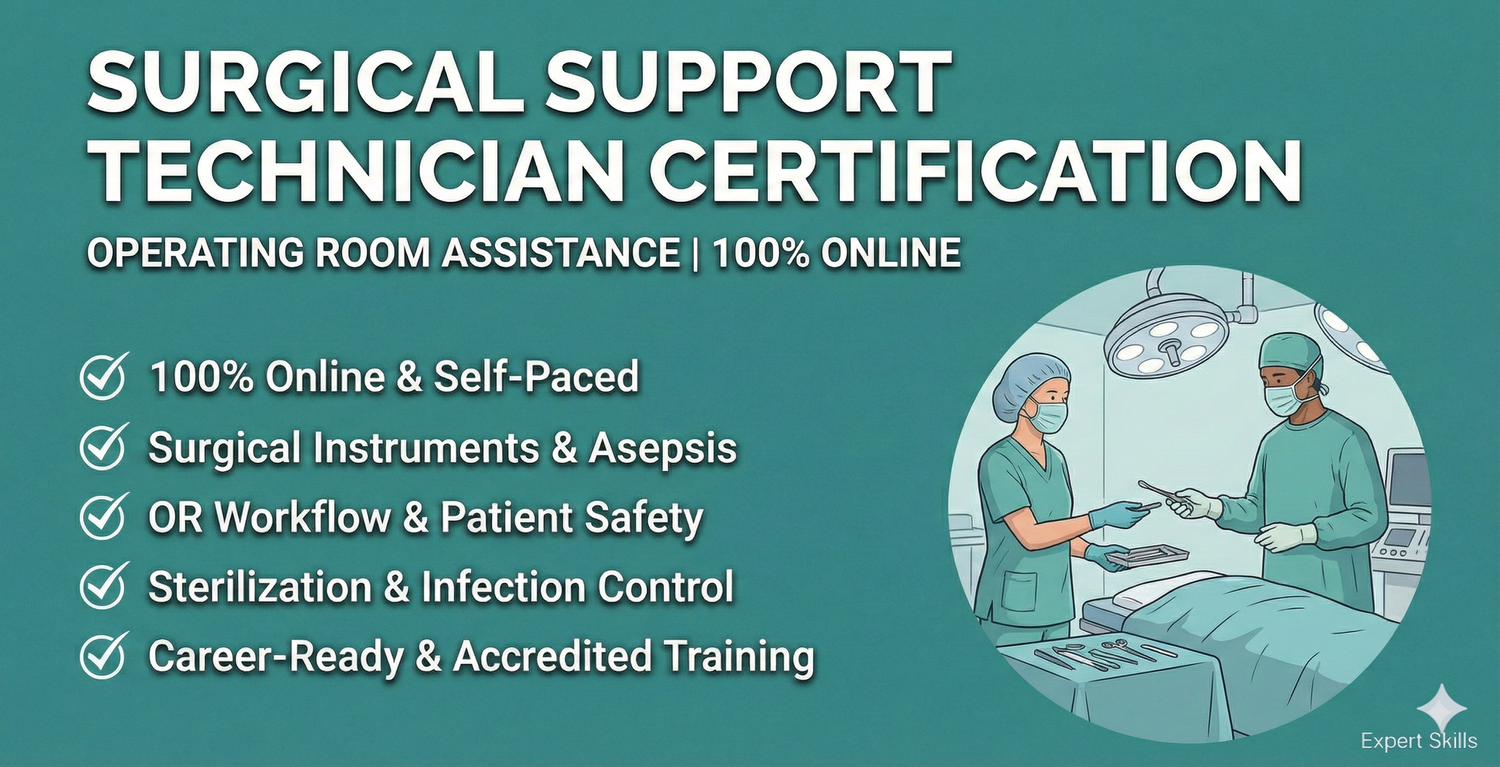
Introduction to the Surgical Support Technician Role
A Surgical Support Technician is a critical non-licensed healthcare professional who works behind the scenes to ensure that surgical procedures can be performed safely, efficiently, and without interruption. While this role does not involve making clinical decisions or performing surgical interventions, it directly supports those who do. The success of every surgical case depends not only on the skill of the surgeon, but also on the reliability, accuracy, and preparedness of the support systems surrounding the procedure. Surgical Support Technicians are a key part of that system.
This role exists because surgery is complex, fast-paced, and high-risk. Instruments must be sterile, equipment must function correctly, supplies must be available at exactly the right moment, and safety standards must be followed without exception. When these conditions are met, surgeons and nurses can focus on patient care. When they are not, patient harm, surgical delays, and serious errors can occur. The Surgical Support Technician helps prevent those failures by managing workflows, materials, and environmental readiness throughout the surgical process.
Although job titles may vary by facility—such as surgical support staff, perioperative support technician, OR support technician, or central processing support—the foundational responsibilities remain consistent. The Surgical Support Technician operates within defined boundaries, performing essential support tasks that allow licensed professionals to deliver care safely and effectively.
The Purpose of the Surgical Support Technician Position
The primary purpose of the Surgical Support Technician role is system reliability. Surgery is not forgiving of mistakes. A missing instrument, a contaminated tray, or a malfunctioning piece of equipment can lead to surgical delays, extended anesthesia time, infection risk, or permanent patient injury. The Surgical Support Technician exists to reduce those risks by ensuring that systems work as intended.
Rather than focusing on one patient at a time, this role focuses on the process of surgery itself. That includes preparing instruments, supporting operating room setup, assisting with turnover between cases, managing supplies, and maintaining safety standards across multiple procedures. The technician’s work may not always be visible to patients, but it directly affects patient outcomes.
In this sense, the Surgical Support Technician is both a guardian of safety and a multiplier of efficiency. By handling preparation and support tasks accurately, the technician allows surgeons, nurses, and anesthesia providers to operate at the top of their scope.
Where the Surgical Support Technician Works
Surgical Support Technicians work in a variety of perioperative environments, including hospital operating rooms, ambulatory surgery centers, specialty surgical clinics, and procedural suites. Some technicians work primarily in central processing or sterile processing departments, while others spend more time in operating room support roles. Many positions involve rotating through multiple areas.
Regardless of location, the technician functions as part of the perioperative ecosystem, which includes all areas involved in surgical care before, during, and immediately after surgery. This ecosystem relies on precise coordination between people, equipment, and processes. The technician’s role is to keep that coordination intact.
Understanding “Support” Versus “Clinical” Roles
It is essential to clearly distinguish between support roles and clinical roles in surgery. Clinical roles—such as surgeons, anesthesiologists, registered nurses, and surgical technologists—are licensed or credentialed professionals who perform patient care tasks, make clinical judgments, and are legally responsible for treatment decisions.
The Surgical Support Technician does not diagnose, treat, or make medical decisions. Instead, the technician supports clinical work by managing the environment, tools, and systems required for care. This distinction protects patients and protects the technician from being placed in unsafe or inappropriate situations.
Support does not mean unimportant. In fact, support roles often carry enormous responsibility because errors in preparation or process can undermine even the best clinical care. A surgeon cannot safely operate if instruments are contaminated. An anesthesiologist cannot safely manage a patient if essential equipment is unavailable. The Surgical Support Technician ensures that these foundational needs are met.
How the Role Fits Into the Surgical Team
The surgical team is a highly structured, hierarchical, and interdependent system. Each role has defined responsibilities, and success depends on everyone staying within their scope while communicating effectively. The Surgical Support Technician fits into this structure as a reliable operational partner.
Rather than working independently, the technician works in coordination with multiple roles, often receiving instructions from nursing leadership, sterile processing supervisors, or perioperative managers. The technician must understand not only what tasks to perform, but also how those tasks affect the work of others.
For example, a technician preparing a case cart must understand how the surgeon expects instruments to be organized, how the scrub staff will open and use supplies, and how delays will affect the surgical schedule. This requires situational awareness, attention to detail, and an understanding of surgical workflows.
The Importance of Role Awareness and Accountability
One of the most important professional skills for a Surgical Support Technician is role awareness. This means knowing exactly what you are responsible for, what you are not responsible for, and when to escalate concerns to someone with the authority to act.
In surgery, overstepping boundaries can be just as dangerous as failing to act. A technician who attempts to “fix” a sterile issue without notifying the surgical team may cause contamination. A technician who ignores a problem because they believe it is “not their job” may allow harm to occur. The correct response lies in understanding scope and escalation.
Accountability is central to this role. Surgical Support Technicians are trusted with expensive equipment, sterile instruments, and patient safety systems. Mistakes must be reported, not hidden. Questions must be asked, not assumed away. Professionalism means prioritizing safety over ego, speed, or convenience.
The Technician as a Safety Partner
Modern surgical environments emphasize team-based safety. This means that every person in the room, regardless of title, has a responsibility to speak up when something seems wrong. Surgical Support Technicians are often in a unique position to notice problems early because they handle instruments, supplies, and equipment directly.
A technician may notice that a tray is missing an indicator, that packaging is torn, or that equipment is malfunctioning. Recognizing these issues and escalating them appropriately is a core part of the role. Silence in these situations can lead to patient harm.
Safety partnership does not mean confrontation. It means clear communication, respect for hierarchy, and adherence to established protocols. Knowing how to report concerns calmly and professionally is a key skill that will be developed throughout this course.
Why This Role Requires Specialized Training
Although the Surgical Support Technician role does not require a professional license, it does require specialized knowledge. Surgery is governed by strict regulations, evidence-based standards, and facility-specific policies. Understanding these requirements is essential to performing the role competently.
This course is designed to provide that knowledge from the ground up. Students will learn not only what to do, but why it matters. Understanding the rationale behind procedures improves consistency, judgment, and long-term performance.
A well-trained Surgical Support Technician is not just a task performer. They are a knowledgeable contributor to a complex healthcare system.
Professional Identity and Long-Term Career Value
Many students enter this field as a stepping stone into healthcare, while others choose it as a long-term career. In both cases, professionalism matters. Surgical departments value technicians who are reliable, detail-oriented, and safety-focused. These qualities lead to trust, expanded responsibilities, and career advancement opportunities.
By understanding the role deeply—not just as a list of tasks, but as a vital part of the surgical team—students position themselves for success from their very first day on the job.
Summary of Key Concepts
In this section, you learned that a Surgical Support Technician is a non-licensed healthcare professional who ensures that surgical environments, tools, and workflows function safely and efficiently. You learned how the role supports, but does not replace, clinical decision-making, and how it fits into the broader surgical team. You also learned why role awareness, accountability, and safety-focused behavior are essential to success in this field.
 UKPRN 10092631