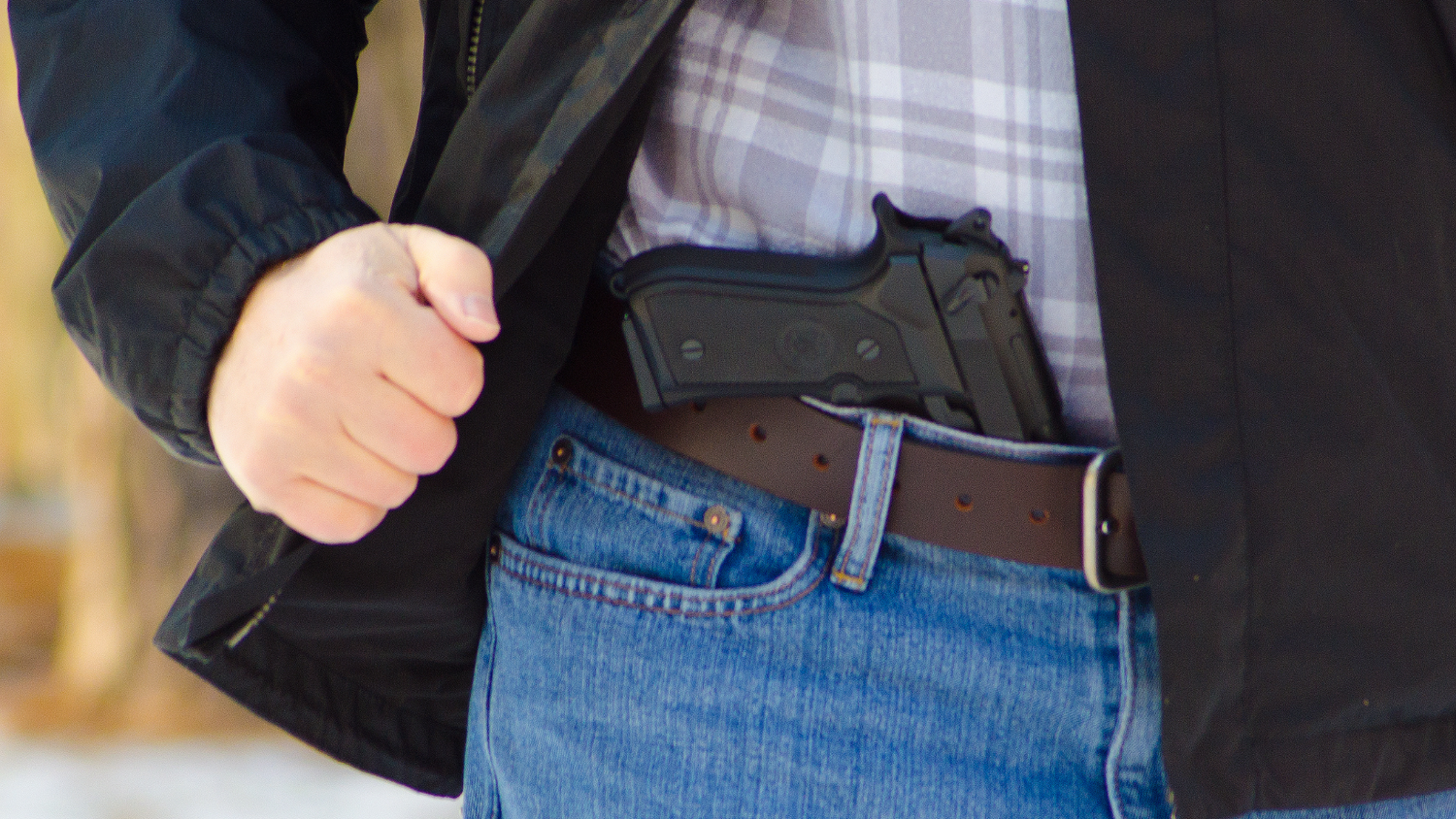
Understand Concealed Carry Safety and the Laws Across States
Build a serious, well-rounded understanding of responsible firearm ownership with the Concealed Carry Education Course from Expert Skills. This program is an educational course covering firearm safety fundamentals, the legal and ethical responsibilities of carrying a firearm, situational awareness, and the realities of the concealed-carry lifestyle. It is written for new and experienced gun owners, personal-protection advocates, and anyone who wants to study the principles and laws surrounding concealed carry in a structured, self-paced way.
This is an educational course on concealed-carry laws, firearm safety, and the responsibilities of carrying a firearm.
Through 5 comprehensive modules and structured lessons, you'll explore the knowledge base behind responsible concealed carry:
This course is accredited by Expert Skills and recognized internationally for professional development. On passing the final exam, you receive your Expert Skills course certificate. You can also order a personalized hard-copy certification, an optional paid upgrade, printed with your name and the course title. Order your official certification here.
You get 2 months of full access to study at your own pace. Need more time? Access can be extended on the site for a small fee.
This course is designed for new and experienced gun owners, personal-protection advocates, and anyone who wants a structured, educational grounding in firearm safety and the laws surrounding concealed carry.
Take a responsible, informed first step into the world of concealed carry. Enroll today, study firearm safety and the law at your own pace, and join thousands of learners who trust Expert Skills for accessible, professional education.
Below is the beginning of the first lesson. Enroll to access all 5 lessons.
Definition of Concealed Carry and How It Differs From Open Carry Concealed carry refers to the practice of carrying a firearm or other weapon in a manner that is not visible to others. This typically involves using specialized holsters, clothing, or bags to ensure that the weapon remains hidden from public view. In contrast, open carry involves visibly carrying a firearm where it can be seen by others, such as on a hip holster or shoulder strap. Concealed carry is designed to allow individuals to be discreet while maintaining the ability to protect themselves if necessary. The concealed nature of the firearm reduces public alarm, minimizes the likelihood of becoming a target, and enables the carrier to respond to threats without drawing unnecessary attention.
Open carry, while legal in many states, often draws more scrutiny and can lead to heightened tensions in public spaces. In some jurisdictions, open carry is more restricted than concealed carry due to concerns about public perception and safety. Concealed carry, on the other hand, is seen as a more balanced approach, allowing lawful citizens to exercise their Second Amendment rights while minimizing disruption to others.
The Primary Purpose of Concealed Carry for Personal Protection and Public Safety The primary purpose of concealed carry is to provide individuals with the means to protect themselves, their loved ones, and others in their community. A concealed weapon offers a critical line of defense against threats such as violent crime, home invasions, or active shooter situations. By allowing responsible citizens to carry concealed firearms, communities benefit from an added layer of security, as potential criminals may think twice before targeting someone who might be armed.
Beyond personal protection, concealed carry contributes to public safety by empowering citizens to act responsibly in dangerous situations. Concealed carriers are often trained to de-escalate conflicts and use their firearms only as a last resort. This defensive approach ensures that concealed carry promotes safety rather than escalating violence. Moreover, the mere possibility that individuals might be armed serves as a deterrent to crime, reducing the likelihood of attacks in areas where concealed carry is common.
The Broader Historical and Constitutional Context of Concealed Carry in the U.S. Concealed carry has a long and complex history in the United States, deeply intertwined with the Second Amendment to the Constitution, which states: "A well regulated Militia, being necessary to the security of a free State, the right of the people to keep and bear Arms, shall not be infringed." While the Second Amendment has been subject to various interpretations, it is widely understood to protect an individual’s right to own and carry firearms for lawful purposes, including self-defense.
Historically, laws regulating concealed carry have evolved significantly. In the early 19th century, many states implemented strict restrictions or outright bans on concealed carry, viewing it as a practice associated with criminal behavior. Over time, these attitudes shifted as the importance of self-defense became more widely recognized. In the late 20th and early 21st centuries, the concealed carry movement gained momentum, with many states adopting "shall issue" laws that make it easier for law-abiding citizens to obtain permits.
Today, concealed carry is recognized as a vital aspect of personal liberty and public safety. Legal battles and legislative efforts continue to shape the landscape of concealed carry, ensuring that individuals have the tools and training needed to exercise their rights responsibly.
Enhanced Personal Security and Crime Deterrence Carrying a concealed weapon significantly enhances personal security by providing a reliable means of defense in dangerous situations. Whether walking to your car at night, traveling through unfamiliar areas, or protecting your home, having a concealed firearm ensures that you are prepared to respond to potential threats. Studies have shown that concealed carry can deter crime, as criminals are less likely to target individuals who may be armed.
The presence of concealed firearms in a community can also contribute to broader crime deterrence. When potential offenders know that citizens may be armed, they are more likely to reconsider their actions. This "halo effect" of concealed carry benefits not only the carriers themselves but also their families, friends, and neighbors.
Psychological Empowerment and Developing a Defensive Mindset Becoming a concealed carrier fosters psychological empowerment and a heightened sense of responsibility. The knowledge that you are capable of defending yourself and others instills confidence and reduces feelings of vulnerability. This empowerment extends beyond physical security, influencing how individuals approach challenges in other areas of life.
A defensive mindset is a critical component of concealed carry. It involves being constantly aware of your surroundings, assessing risks, and making decisions that prioritize safety. Concealed carriers must learn to avoid dangerous situations whenever possible and to act decisively when necessary. Developing this mindset requires ongoing training, practice, and education, ensuring that carriers are prepared to respond effectively under stress.
Ethical Responsibilities and Understanding the Moral Weight of Carrying a Firearm Carrying a concealed weapon is not just a legal right—it is a profound ethical responsibility. Concealed carriers must understand the moral implications of their actions and the potential consequences of using deadly force. This responsibility requires a commitment to upholding the highest standards of safety, restraint, and judgment.
Ethical concealed carry begins with understanding the laws governing the use of force. Carriers must know when it is legally and morally appropriate to draw their weapon and when to seek alternative solutions. They must also be prepared to de-escalate conflicts and avoid situations where force might become necessary. Ultimately, the decision to carry a firearm is a commitment to protecting life, not taking it unnecessarily.
State-Specific Requirements and How to Navigate Them The process of obtaining a concealed carry permit varies widely between states, reflecting differences in legal requirements, training standards, and administrative procedures. Some states operate under "shall issue" laws, meaning that permits are issued to applicants who meet the basic requirements, while others use "may issue" systems, which give authorities more discretion in approving applications.
Navigating these requirements begins with researching your state’s laws. Most states provide detailed information online, including eligibility criteria, required documentation, and application procedures. Applicants should also consider consulting firearms instructors or legal professionals who specialize in concealed carry to ensure they fully understand the process.
Steps for Obtaining Certification, Including Training, Application, and Background Checks
Training: Most states require applicants to complete a certified training course covering firearm safety, handling, and applicable laws. Courses may include classroom instruction, live-fire exercises, and written exams to ensure that applicants are knowledgeable and proficient.
Application: After completing training, applicants must submit a formal application to the relevant licensing authority. This typically includes providing proof of training, identification, and any required fees.
Background Checks: A thorough background check is conducted to verify that the applicant is eligible to carry a firearm. This process may include reviewing criminal records, mental health history, and other disqualifying factors.
Permit Issuance: Once the application is approved, the applicant receives their concealed carry permit, allowing them to legally carry a concealed weapon.
Common Challenges and How to Overcome Them During the Process The certification process can be challenging, but these obstacles can be overcome with proper preparation:
Delays in Processing: Permit applications can take weeks or even months to process. Applicants can avoid unnecessary delays by ensuring that all documentation is complete and accurate before submission.
State-Specific Training Requirements: Some states have stringent training requirements, including live-fire proficiency tests. Choosing a reputable training provider with experienced instructors can help applicants meet these standards.
Financial Costs: The costs associated with training, applications, and permits can be a barrier for some individuals. Planning and budgeting for these expenses ahead of time ensures a smoother process.
Legal Complexity: Understanding the nuances of state and federal firearms laws can be daunting. Staying informed through legal resources, firearms organizations, or legal counsel can provide clarity and confidence.
By understanding the steps involved and proactively addressing potential challenges, applicants can successfully navigate the concealed carry certification process and enjoy the benefits of responsible firearm ownership.
Treating Every Firearm as if It Is Loaded The foundation of firearm safety is to always assume that every firearm is loaded, regardless of whether you believe it to be unloaded. This mindset minimizes the likelihood of negligent discharges and ensures that you handle every firearm with the respect and caution it deserves. Verifying a firearm’s status by visually and physically inspecting it should become a routine habit, even if you just set it down moments earlier.
Maintaining Safe Muzzle Discipline at All Times Safe muzzle discipline involves keeping the muzzle of the firearm pointed in a safe direction at all times. A "safe direction" is one where, if a discharge were to occur, it would not cause injury or damage. This rule is essential for preventing accidents, particularly in environments where multiple people are handling firearms.
Keeping Fingers Off the Trigger Until Ready to Fire One of the most common causes of accidental discharges is placing a finger on the trigger before being prepared to shoot. Proper trigger discipline involves keeping your trigger finger straight and outside the trigger guard until you have made the conscious decision to fire. This rule is especially crucial during high-stress situations or when drawing a firearm from a holster.
Knowing Your Target and What Lies Beyond It Before firing a shot, you must identify your target and ensure that it is safe to shoot. This includes being aware of what lies behind and around your target, as bullets can pass through objects or miss the intended target entirely. Practicing this rule ensures that every shot is accounted for and minimizes the risk of unintended harm.
Storage Solutions: Safes, Lockboxes, and Trigger Locks Proper storage is critical to preventing unauthorized access to firearms, particularly by children, visitors, or intruders. Safes, lockboxes, and trigger locks provide varying levels of security and accessibility. Selecting the right storage solution depends on your specific needs, including the size of your firearm collection, the presence of children in the home, and the need for quick access in emergencies.
Preventing Unauthorized Access Firearms should always be stored in a manner that prevents unauthorized individuals from accessing them. This includes using lockable storage solutions, keeping firearms unloaded when not in use, and storing ammunition separately. Educating family members about firearm safety and ensuring that they understand the importance of these precautions further enhances security.
Storing Firearms and Ammunition Separately and Securely While quick access is important for self-defense, storing firearms and ammunition separately can provide an additional layer of safety. For firearms not intended for immediate use, unloaded storage with ammunition secured in a separate location is a best practice.
Safe Practices When Carrying or Transporting Firearms When carrying a firearm, whether concealed or openly, it is important to maintain control of it at all times. This includes using a secure holster that fully covers the trigger guard and ensures proper retention. When transporting firearms, they should be unloaded and secured in a case or lockbox, following state and federal transportation laws.
Firearms Etiquette in Social or Public Environments Concealed carriers should practice discretion and avoid drawing attention to their firearm. This includes choosing clothing that effectively conceals the weapon and avoiding unnecessary adjustments in public. Additionally, maintaining a calm and respectful demeanor when discussing firearms helps promote a positive image of responsible gun ownership.
Mitigating Risks in High-Stress Situations or Emergencies Handling a firearm during a high-stress situation requires training and preparation. Regular practice with drawing, aiming, and firing under simulated stress conditions helps ensure that you can act effectively and responsibly when it matters most. Understanding how to de-escalate potential conflicts before resorting to a firearm is equally important for reducing risks.
Techniques for a Stable and Effective Shooting Stance A stable shooting stance provides the foundation for accurate and controlled shooting. Two common stances are the Isosceles Stance and the Weaver Stance:
Isosceles Stance: In this stance, the shooter faces the target squarely with feet shoulder-width apart and knees slightly bent. Both arms extend forward to create an isosceles triangle shape with the shoulders. This stance promotes balance and recoil management.
Weaver Stance: This stance involves placing the non-dominant foot slightly forward while the dominant foot stays back. The shooter’s body angles slightly, and the arms create a push-pull dynamic. This stance is known for its flexibility in defensive situations.
Importance of a Firm and Consistent Grip for Accuracy A proper grip ensures control over the firearm during shooting and helps manage recoil effectively. The dominant hand should wrap around the firearm’s grip firmly, with the index finger resting outside the trigger guard until ready to fire. The support hand should wrap over the dominant hand, with thumbs pointing forward along the slide. A consistent grip reduces movement and improves shot placement, especially during rapid fire.
Achieving and Maintaining Proper Sight Alignment Sight alignment refers to aligning the front and rear sights of a firearm. The top of the front sight should be level with the top of the rear sight, and the front sight should be centered between the rear sight posts. Consistent sight alignment is crucial for accurate shooting.
Understanding the Sight Picture and Its Role in Accuracy The sight picture is what the shooter sees when the aligned sights are superimposed on the target. The focus should be on the front sight, with the target and rear sight slightly blurred. Mastering sight picture allows for precise shot placement.
Techniques for Smooth Trigger Pulls to Reduce Errors Trigger control is a critical component of accurate shooting. The trigger should be pulled straight back with the pad of the index finger, avoiding any side pressure. A smooth and steady pull minimizes movement and improves accuracy.
Importance of Follow-Through for Consistent Shooting Performance Follow-through involves maintaining proper form and focus after the shot is fired. This includes keeping the sights on the target and preparing for a potential follow-up shot. Practicing follow-through enhances overall shooting performance and ensures readiness for dynamic scenarios.
Identifying Common Mistakes and Implementing Corrective Actions
Anticipating Recoil: This occurs when the shooter flinches in anticipation of the gun’s recoil. Practice dry-firing drills to overcome this tendency.
Jerking the Trigger: Jerking the trigger can throw shots off target. Focus on a smooth and deliberate trigger pull.
Improper Grip: A weak or inconsistent grip can affect accuracy. Ensure both hands are properly positioned and apply firm pressure.
Drills and Exercises to Improve Accuracy and Consistency
Dry-Fire Practice: Dry-firing helps shooters refine their trigger control and sight alignment without live ammunition.
Slow-Fire Drills: Focusing on deliberate and precise shots improves overall accuracy.
Ball and Dummy Drills: Mixing live and dummy rounds in the magazine helps identify and correct flinching or improper trigger control.
Understanding "Reasonable Force" and "Imminent Threat" Self-defense is legally defined as the use of reasonable force to protect oneself or others from an imminent threat of harm. Reasonable force is determined by the severity of the threat and the proportionality of the response. An imminent threat is one that is immediate and unavoidable, leaving no other option but to act.
For example, if an aggressor threatens someone with a deadly weapon, the use of a firearm in self-defense may be deemed reasonable. However, the same response would likely not be justified in a situation involving a minor, non-lethal threat. Understanding the distinction between these scenarios is critical for concealed carriers to act within the bounds of the law.
Differences Between Stand-Your-Ground and Duty-to-Retreat Laws Stand-your-ground laws allow individuals to use deadly force in self-defense without the obligation to retreat, provided they are in a place where they have a legal right to be. In contrast, duty-to-retreat laws require individuals to attempt to avoid conflict by retreating if it is safe to do so before using force.
Each state’s laws vary on this issue, making it essential for concealed carriers to understand the specific legal framework in their jurisdiction. Familiarity with these laws ensures that individuals make informed decisions in high-stress situations.
Evaluating Proportional Responses to Escalating Threats The use of force continuum is a framework that helps individuals determine the appropriate level of force in response to a threat. The continuum typically progresses from non-physical measures, such as verbal de-escalation, to intermediate measures like physical restraint, and ultimately to deadly force if necessary.
Concealed carriers must evaluate each situation carefully to ensure that their response aligns with the level of threat. Using deadly force prematurely or inappropriately can lead to serious legal consequences.
Recognizing Situations Where Deadly Force Is Justified Deadly force is justified only when there is an immediate threat of death or serious bodily harm. Examples include an armed robbery, a home invasion, or an assault with a deadly weapon. In such cases, the use of deadly force must be proportional to the threat and intended solely for protection, not retaliation.
Overview of Legal Differences and Reciprocity Agreements Deadly force laws and concealed carry reciprocity agreements vary significantly across states. While some states have broad protections for self-defense under stand-your-ground laws, others impose stricter requirements for using force. Reciprocity agreements allow concealed carry permit holders to legally carry firearms in states that recognize their permit.
Concealed carriers should research and understand the specific laws in each state they plan to visit. Resources such as state government websites and firearms organizations provide up-to-date information on these legal variations.
Resources for Staying Informed About State-Specific Laws Maintaining compliance with state laws requires ongoing education. Subscribing to legal updates, attending seminars, and consulting with legal professionals ensure that concealed carriers act as protectors in their communities rather than potential sources of harm.
The Broader Historical and Constitutional Context of Concealed Carry in the U.S.
The practice of concealed carry is deeply rooted in American history and linked to the Second Amendment of the U.S. Constitution, which states: "A well regulated Militia, being necessary to the security of a free State, the right of the people to keep and bear Arms, shall not be infringed." While interpretations of the Second Amendment have varied, it has consistently been recognized as the foundation for Americans' right to own and carry firearms.
Historically, the early 19th century saw states adopting restrictive concealed carry laws, viewing the practice as associated with criminal behavior. Over time, however, these laws evolved as the importance of self-defense gained broader recognition. The late 20th century marked a shift, with more states adopting "shall issue" concealed carry policies, making it easier for law-abiding citizens to obtain permits.
Today, concealed carry is a reflection of individual liberty and responsibility. Most states have well-defined processes to ensure responsible citizens can exercise their right to self-defense while maintaining public safety. The Supreme Court has also ruled in several landmark cases to reinforce the individual right to bear arms, including concealed carry, under constitutional protections.
2. Benefits and Responsibilities of Being a Concealed Carrier
Enhanced Personal Security and Crime Deterrence
Carrying a concealed weapon provides individuals with a critical tool to enhance their personal security. In situations where personal safety is at risk, a concealed firearm can serve as the ultimate equalizer, giving individuals the means to protect themselves against larger or stronger attackers. This is especially true for vulnerable populations, such as the elderly or those who live or work in areas with high crime rates.
Statistically, the presence of armed citizens has been linked to lower crime rates. The potential that someone in a crowd or community could be armed acts as a deterrent to criminal activity. Criminals are less likely to target individuals or locations where concealed carriers are present, as the element of uncertainty increases their risk of being stopped or apprehended.
Beyond individual security, concealed carry contributes to the overall safety of communities. Responsible concealed carriers may be able to intervene in emergencies, such as active shooter situations, before law enforcement arrives. While this is not the primary role of concealed carriers, their presence can save lives when seconds count, and professional assistance is minutes away.
Psychological Empowerment and Developing a Defensive Mindset
Carrying a concealed firearm fosters a sense of empowerment. Knowing that you are equipped to defend yourself and others can help reduce feelings of vulnerability in high-risk situations. This psychological benefit often extends beyond personal protection, giving carriers increased confidence in their daily lives.
However, this empowerment comes with a significant responsibility: the development of a defensive mindset. A defensive mindset is the ability to maintain situational awareness, assess threats, and make sound decisions under pressure. This mindset requires individuals to prioritize de-escalation and avoidance over confrontation whenever possible.
Situational awareness involves being mindful of your surroundings, recognizing potential dangers, and positioning yourself in a way that minimizes risk. For example, when entering a public space, a defensive-minded individual might identify exits, assess the crowd, and avoid areas that appear unsafe. Such habits not only improve personal safety but also reduce the likelihood of needing to draw a firearm.
Ethical Responsibilities and Understanding the Moral Weight of Carrying a Firearm
Carrying a concealed firearm is a profound ethical responsibility. It is not just a matter of legality but also one of moral accountability. Concealed carriers must fully understand the weight of the decision to carry a weapon capable of taking a life. This understanding should inform every action they take, from avoiding unnecessary conflicts to ensuring their firearm is stored and handled safely.
The use of deadly force is a decision that cannot be taken lightly. Concealed carriers must be prepared to justify their actions, both legally and ethically, in situations where force is used. This requires a clear understanding of self-defense laws, proportionality, and the consequences of their actions. Training and education play a crucial role in helping carriers navigate these challenges.
Furthermore, ethical concealed carry extends to interactions with others. For instance, carriers should avoid escalating conflicts, even in situations where they might feel provoked. The presence of a firearm makes it imperative to remain calm and collected, as any display of aggression could lead to unnecessary violence or legal complications.
Carriers also have a duty to secure their firearms responsibly. Preventing unauthorized access, especially by children or inexperienced individuals, is a fundamental ethical obligation. This includes using safes, lockboxes, or trigger locks to ensure that firearms do not fall into the wrong hands.
Ultimately, the ethical responsibilities of carrying a firearm require a commitment to the highest standards of behavior. Carriers must act with integrity, prioritizing the safety and well-being of those around them.
3. Overview of the Concealed Carry Certification Process
State-Specific Requirements and How to Navigate Them
Obtaining a concealed carry permit varies significantly from state to state, with each jurisdiction establishing its own requirements, application processes, and regulations. Some states operate under “shall issue” policies, meaning that any applicant who meets the criteria must be issued a permit. Others follow “may issue” policies, which grant local authorities greater discretion in approving applications. Additionally, certain states allow for constitutional carry, which does not require a permit to carry a concealed firearm.
To navigate state-specific requirements, prospective applicants must begin by researching their state’s laws. This information is often available on official state websites, including details on eligibility criteria, fees, and training requirements. Factors that commonly influence eligibility include:
Age (typically 21 years or older).
Residency status (some states allow non-residents to apply).
A clean criminal record, free from felony convictions or certain misdemeanors.
No history of substance abuse or mental health issues that would disqualify an applicant.
Understanding reciprocity agreements is also crucial, as some permits are recognized in other states, allowing permit holders to carry concealed firearms when traveling. However, carriers should always confirm the specific laws of their destination state to ensure compliance.
Steps for Obtaining Certification, Including Training, Application, and Background Checks
The certification process generally involves the following steps:
Complete Required Training:
Most states require applicants to attend a certified concealed carry training course. These courses typically cover firearm safety, legal considerations, and practical skills such as drawing from concealment and marksmanship. Live-fire training is often included to ensure applicants can handle a firearm competently.
Submit an Application:
After completing the training, applicants must fill out an application, which may be submitted online or in person. The application typically requires:
Proof of training (certificate of completion).
Government-issued identification.
Fingerprints for background checks.
Payment of application fees.
Undergo a Background Check:
A thorough background check is conducted to verify the applicant’s eligibility. This check includes reviewing criminal history, mental health records, and other factors that could disqualify an individual.
Receive Your Permit:
Once the application is approved, the permit is issued. The processing time can vary from a few weeks to several months, depending on the state and application volume.
Common Challenges and How to Overcome Them During the Process
While the certification process is straightforward for many, applicants may encounter challenges, including:
Delays in Processing: Applications can take time, particularly in states with high volumes of permit requests. To minimize delays, applicants should ensure all documentation is accurate and complete before submission.
Training Requirements: Some states have rigorous training standards, including live-fire proficiency tests. Choosing a reputable instructor or training facility can help applicants meet these requirements.
Legal Complexity: Understanding the nuances of state and federal firearm laws can be daunting. Applicants should consider consulting legal resources or taking additional courses to improve their understanding of the law.
Cost Barriers: The cost of training, application fees, and fingerprinting can add up. Budgeting for these expenses in advance ensures a smoother process.
By preparing thoroughly and staying informed, applicants can overcome these obstacles and successfully obtain their concealed carry certification.
1. Goals and Objectives of the Course
Promoting Firearms Safety as a Core Value
The primary goal of this course is to instill a strong and unwavering commitment to firearms safety in every participant. Safe firearm handling is not just a legal responsibility but also a moral obligation for every concealed carrier. By the end of the course, students will have an in-depth understanding of the Four Universal Firearms Safety Rules:
Treat every firearm as if it is loaded.
Always keep the muzzle pointed in a safe direction.
Keep your finger off the trigger until ready to fire.
Be sure of your target and what lies beyond it.
These rules will be reinforced throughout the course, ensuring that students not only understand them intellectually but also practice them habitually. This focus on safety is designed to minimize accidents, promote responsible ownership, and build confidence in firearm handling.
Developing Practical Skills and Situational Awareness
Practical skills are at the heart of effective concealed carry. This course is structured to provide hands-on training in essential techniques, including:
Proper grip and stance for stable, accurate shooting.
Drawing from concealment safely and efficiently.
Effective target acquisition and sight alignment.
Managing stress and maintaining control in high-pressure situations.
Equally important is the development of situational awareness. Concealed carriers must learn to recognize and assess potential threats, avoid dangerous situations, and make informed decisions quickly. The course includes practical exercises and real-world scenarios designed to sharpen observational skills and enhance a defensive mindset.
Preparing Students for the Legal, Ethical, and Practical Aspects of Concealed Carry
Concealed carry involves more than just the mechanics of handling a firearm; it requires a deep understanding of the legal, ethical, and practical implications of carrying a weapon in public. This course provides a comprehensive overview of self-defense laws, the use of force continuum, and the ethical responsibilities of firearm ownership.
By the end of the course, students will:
Be familiar with the legal definitions of self-defense and the conditions under which force is justified.
Understand their ethical responsibilities, including de-escalation tactics and conflict avoidance.
Be prepared to navigate the practical realities of concealed carry, from selecting the right holster to safely storing firearms at home.
2. Requirements for Successful Completion
Completion of All Course Modules and Assessments
To receive certification, students must complete all course modules and pass the associated assessments. Each module builds on the previous one, ensuring a comprehensive understanding of the material. Assessments will include:
Written exams to test knowledge of safety rules, legal principles, and practical skills.
Practical evaluations, such as demonstrating proper firearm handling and marksmanship.
Participation in all modules is mandatory, as each component is essential for becoming a responsible and capable concealed carrier.
Demonstrating Mastery of Firearms Safety, Handling, and Legal Principles
Mastery of firearms safety, handling, and legal principles is a key requirement for course completion. Students must demonstrate:
Safe firearm handling techniques, including proper loading, unloading, and storage.
Accurate shooting skills, with a focus on consistency and precision.
A thorough understanding of self-defense laws and the ethical considerations of using deadly force.
Practical exercises and role-playing scenarios will be used to evaluate students’ ability to apply these skills and principles in real-world situations.
3. How to Apply for a Concealed Carry Permit After Course Completion
Step-by-Step Guide to Submitting an Application
Upon completing the course, students will be ready to apply for their concealed carry permit. This process typically involves the following steps:
Gather required documentation, including the course completion certificate, government-issued ID, and any additional forms specified by your state.
Submit the application to your state’s licensing authority, either online or in person.
Pay the application fee and schedule an appointment for fingerprinting, if required.
Understanding Documentation Requirements and Navigating Background Checks
Each state has specific documentation requirements, which may include proof of residency, a valid driver’s license, and a clean criminal record. Background checks are conducted to verify that applicants meet eligibility criteria, such as being free from felony convictions and disqualifying mental health conditions.
Students will receive detailed guidance on how to gather and submit the necessary documentation, as well as tips for navigating the background check process smoothly.
Best Practices for Ensuring a Smooth and Successful Application Process
To avoid delays or complications, students are encouraged to:
Double-check all application materials for accuracy and completeness.
Submit applications well in advance of any deadlines.
Maintain open communication with the licensing authority to address any issues that may arise.
Following these best practices ensures a smooth and efficient application process, allowing students to obtain their concealed carry permits without unnecessary stress.
Yes. Expert Skills is registered under the UK Government's UK Register of Learning Providers (UKRLP / UKPRN 10092631), and the course is accredited by Expert Skills and recognized internationally for professional development.
No prior experience is required. The course starts with the fundamentals and builds up step by step.
You have 2 months of full access. If you need more time, you can extend your access on the site for a small fee.
Yes. The course is fully online and works on your phone, tablet, or computer, so you can learn anywhere.
Issued under our UKRLP registration (UKPRN 10092631). Recognized in the United States and United Kingdom.
 UKPRN 10092631
Enroll today, get instant access.
Enroll to continue reading
Get instant access to all 5 lessons.