Learning Objectives
- Describe what a Veterinary Support Assistant (VSA) is and the kinds of work the role involves.
- Place the VSA accurately within the clinical team and explain who they report to.
- State the clear scope boundary of the role — what a VSA does not do.
- Identify the settings a VSA typically works in.
- Recognise why confidentiality and professionalism matter from day one.
- Navigate the structure of this course and how the lessons build on each other.
What is a Veterinary Support Assistant?
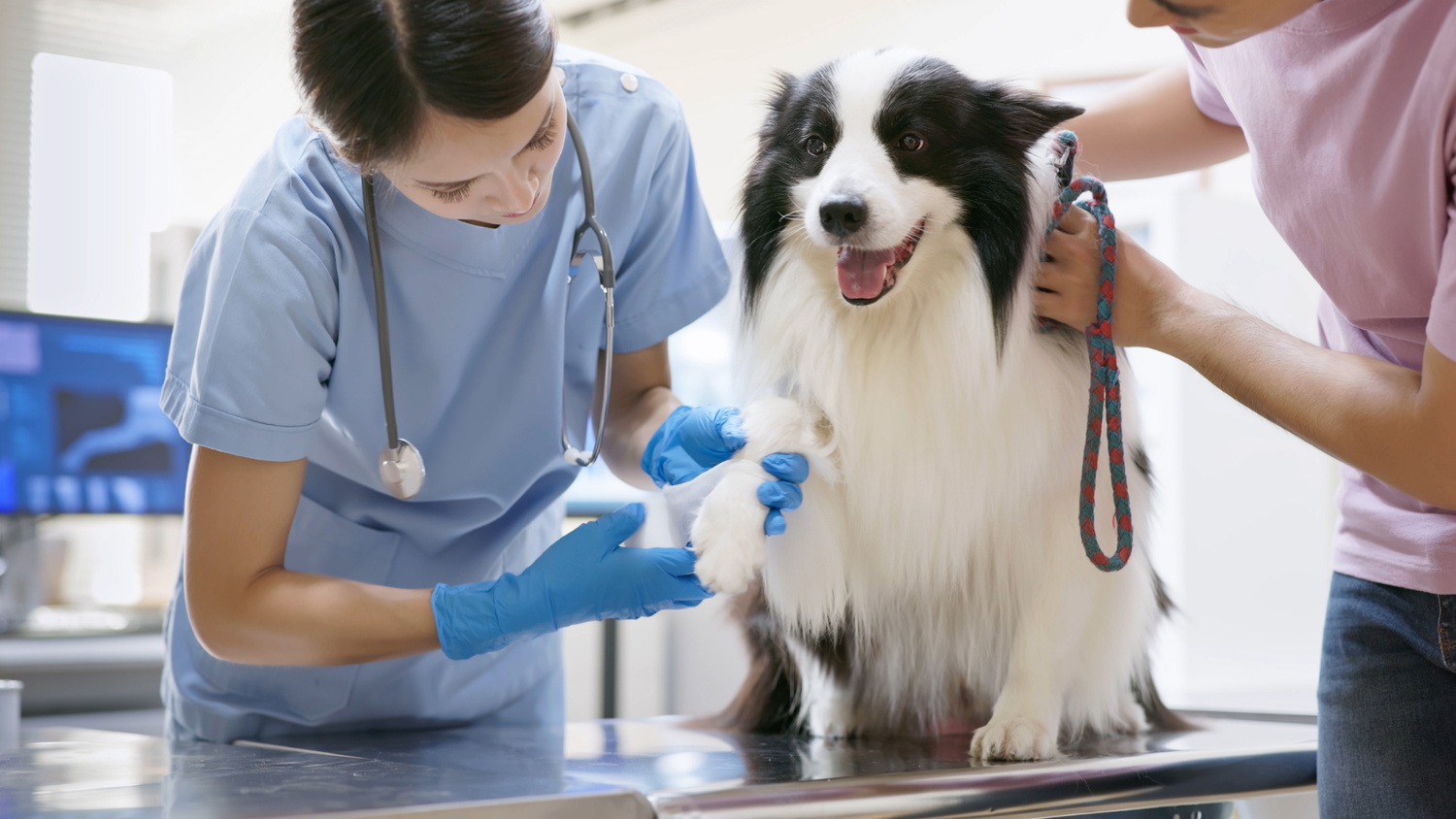
A veterinary practice runs on teamwork. Behind every calm consultation and every smooth surgery is a group of people each doing a defined job — and the Veterinary Support Assistant is the glue that holds the practical day-to-day together. If you have ever wondered who settles a frightened cat into its kennel, restocks the consult room before the next appointment, or keeps the patient records straight while the vet is in theatre, much of that is the VSA.
Veterinary Support Assistant (VSA) — a non-credentialed support team member who assists veterinarians and veterinary nurses with animal care, practice tasks, and client service, always working under the direct supervision of qualified clinical staff.
The phrase "support assistant" is the key to the whole role. A VSA supports the people who carry clinical responsibility; they do not carry it themselves. That is not a limitation to apologise for — it is the point of the job. A well-run practice depends on someone who keeps the wheels turning so that the vet and nurse can concentrate on diagnosis, treatment, and skilled procedures.
Typical VSA work falls into three broad areas:
Animal careFeeding, watering, walking, bathing and grooming; settling patients into kennels; cleaning and disinfecting cages, runs and exam rooms; gentle monitoring of how animals are coping.
Practice supportPreparing and cleaning equipment, restocking consult rooms, helping move and position animals during procedures, and keeping the working environment clean, stocked and safe.
Client & adminGreeting clients, answering phones, booking appointments, and helping maintain accurate patient records — often the friendly first point of contact for worried owners.
Key PrincipleA VSA makes the clinical team more effective. Every task you take off a vet's or nurse's plate is time they can spend on the work only they are qualified to do.
Where the VSA fits in the team
To work well in a practice, you need a clear mental map of who does what — and who is responsible for what. Roles vary in name between countries and even between practices, but the structure below is typical.
The Veterinarian (the Vet)
The veterinarian is the licensed medical professional at the centre of clinical care. They have completed a full degree in veterinary medicine and passed the licensing required to practise.
Veterinarian — a licensed medical professional qualified to examine, diagnose, prescribe, perform surgery, and make clinical decisions about an animal's treatment.
The vet diagnoses illness and injury, decides on treatment, prescribes medication, and performs surgery. They also lead difficult conversations with owners — from explaining a diagnosis to guiding a family through end-of-life decisions. Everything diagnostic and prescriptive flows from, or is authorised by, the vet.
The Veterinary Nurse / Technician
The veterinary nurse — called a veterinary technician or veterinary technologist in some countries — is a trained, credentialed clinical professional who works under the vet's direction. This is the role people most often confuse with the VSA, so the distinction matters.
Veterinary Nurse / Technician — a qualified, credentialed clinical professional who carries out skilled nursing tasks (monitoring vital signs, taking samples, assisting in surgery, administering treatment as directed) under a veterinarian's supervision.
Nurses monitor patients, take and record vital signs, run or assist with diagnostic tests, help in theatre, and deliver skilled nursing care. Crucially, this role requires formal qualification and registration. A Veterinary Support Assistant is not a veterinary nurse, and completing a support-assistant course does not make you one.
The Veterinary Support Assistant (you)
The VSA assists both the vet and the nurse with the practical, hands-on, and administrative work described earlier. You work under their direction. You do not diagnose, prescribe, or perform medical or surgical procedures — those belong to credentialed staff. What you do bring is reliability, care, attention to detail, and the ability to keep a busy practice running smoothly.
Front-of-house and management roles
Veterinary ReceptionistUsually the first person a client meets. Greets owners and pets, books appointments, handles billing and records, and offers calm reassurance — including in distressing situations.
Desk / Front-of-house ManagerOversees the front desk and reception team, manages scheduling and supplies, and keeps the client-facing side of the practice running. Smaller practices may not have this role.
Practice Director / ManagerLeads the business side — staffing, budgets, policies, compliance, and overall direction — so the clinical team can focus on patients.
You will not work in isolation from any of these people. A good VSA understands the whole map, knows who to go to with a given question, and respects the boundaries between roles.
The scope boundary — what a VSA does NOT do
This is the single most important idea in the entire course, so it is worth being blunt about it.
⚠ ImportantA Veterinary Support Assistant is a non-credentialed support role. A VSA does not diagnose conditions, does not prescribe or independently decide medication, and does not perform medical or surgical procedures. You are not a veterinary nurse/technician and not a veterinarian. You always work under the supervision of qualified clinical staff.
Where you assist with clinical activity, you do so on the explicit instruction and under the supervision of a vet or nurse — and only within what your practice and local regulations allow. The settings, laws, and exact task lists differ from country to country and practice to practice, so the golden rule is simple: if you are unsure whether something is within your role, ask before you act. Knowing the edge of your competence is itself a professional skill.
ExampleA worried owner asks you, "My dog has been limping — do you think it's broken?" The supportive, in-scope answer is not a guess about the injury. It is: "I can see you're concerned — let me get you booked in so the vet can examine him properly." You have helped the client without stepping into diagnosis.
Where Veterinary Support Assistants work
The role exists wherever animals receive care. Common settings include:
- General veterinary practices and clinics treating companion animals.
- Animal hospitals offering surgery, emergency, and overnight care.
- Animal shelters and rescue centres.
- Mixed or large-animal practices, where you may work with horses, farm animals, or exotics.
The pace, the species, and the exact duties shift with the setting — a shelter morning looks very different from a surgical hospital — but the core of the role stays the same: dependable, supervised support for the animals and the team.
Confidentiality and professionalism
From your first shift you will see and handle sensitive information, and you will represent the practice to the public. Two habits underpin everything else.
Confidentiality — the duty to keep client and patient information private: medical histories, test results, billing details, and anything shared in the course of care must be protected and never disclosed to unauthorised people.
Professionalism — conducting yourself reliably and respectfully: communicating clearly, dressing appropriately, treating clients, colleagues and animals with courtesy, and following the practice's policies and procedures.
In practice this means storing records securely, not discussing a client's pet where you might be overheard, staying calm and kind with anxious owners, and following the chain of supervision rather than improvising. These are not abstract values — they are how trust is built and kept, and they protect you, the practice, and the animals in your care.
How this course is structured
This lesson has oriented you to the role. From here, the course builds your knowledge and skills in a deliberate order — foundations first, then handling, then care and safety, then the harder real-world situations.
- Foundations. Basic Anatomy & Physiology Terms and Veterinary Terminology give you the shared language of the practice so you can understand instructions and records.
- Working with animals. Basic Animal Handling and Advanced Animal Handling teach safe, humane handling, while Animal Psychology helps you read and reduce animal stress.
- The working environment. Around the Veterinary Practice and Health and Safety Regulations cover how the practice operates and how to keep it safe and compliant.
- Responding to problems. First Aid, Emergencies, and Euthanasia prepare you to support the team — within your scope — when things become urgent or emotionally difficult.
- Growing in the role. Developing Your Skill Set looks at how to keep learning and progress from here.
Each lesson assumes what came before it, so working through them in order will give you the strongest foundation.
Key Takeaways
- A Veterinary Support Assistant is a non-credentialed support role that assists vets and nurses with animal care, practice tasks, and client service.
- The VSA always works under the supervision of qualified clinical staff and is distinct from a veterinary nurse/technician and a veterinarian.
- A VSA does not diagnose, prescribe, or perform medical or surgical procedures; when unsure whether a task is in scope, ask first.
- VSAs work in clinics, animal hospitals, shelters, and mixed/large-animal practices — duties shift with the setting, but the supportive core stays the same.
- Confidentiality and professionalism are core to the role from day one.
- The course builds in order: foundations and terminology, then handling and psychology, then the practice environment and safety, then first aid, emergencies, euthanasia, and ongoing development.
 UKPRN 10092631